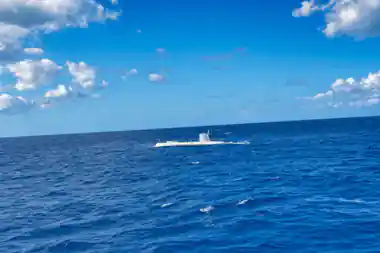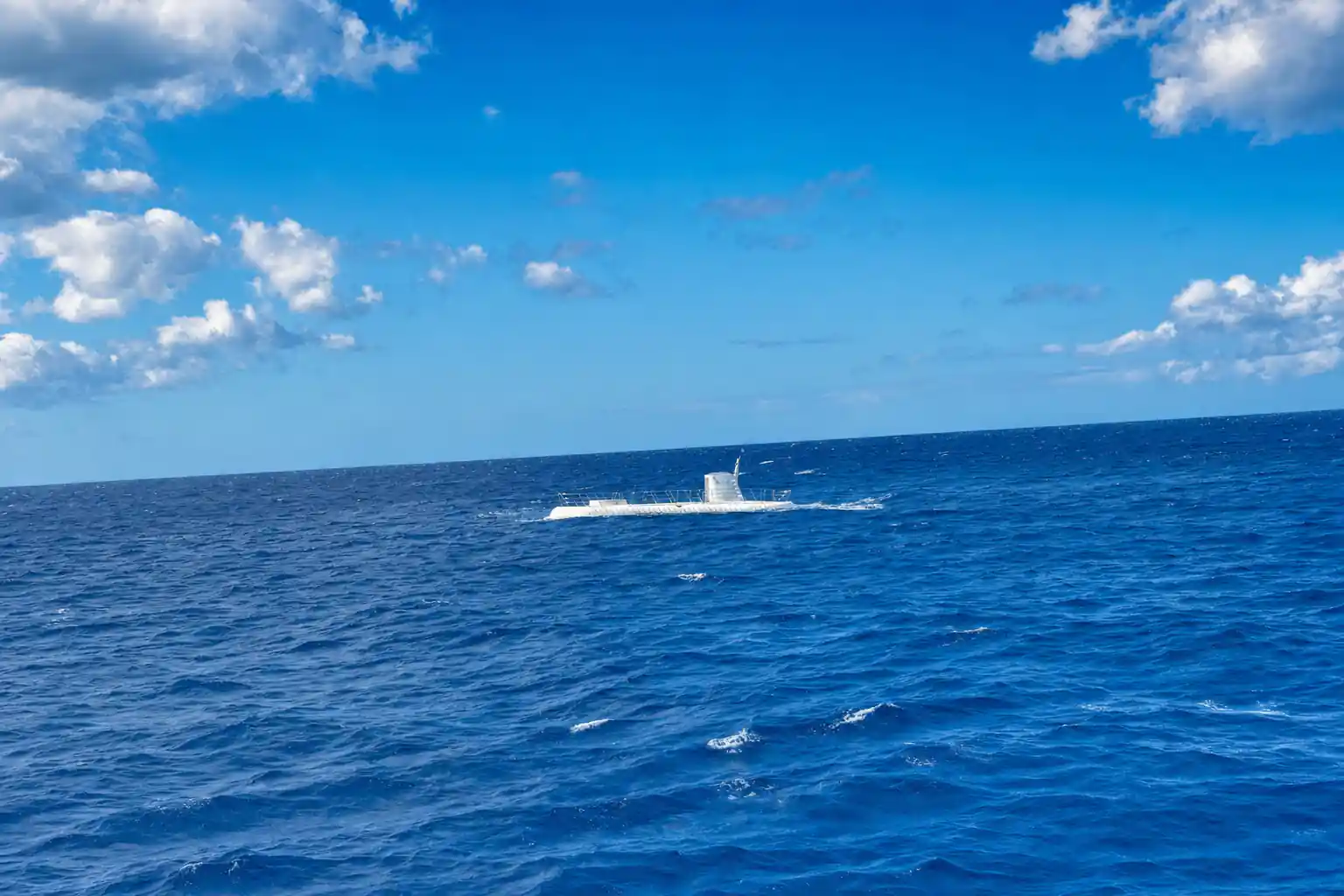
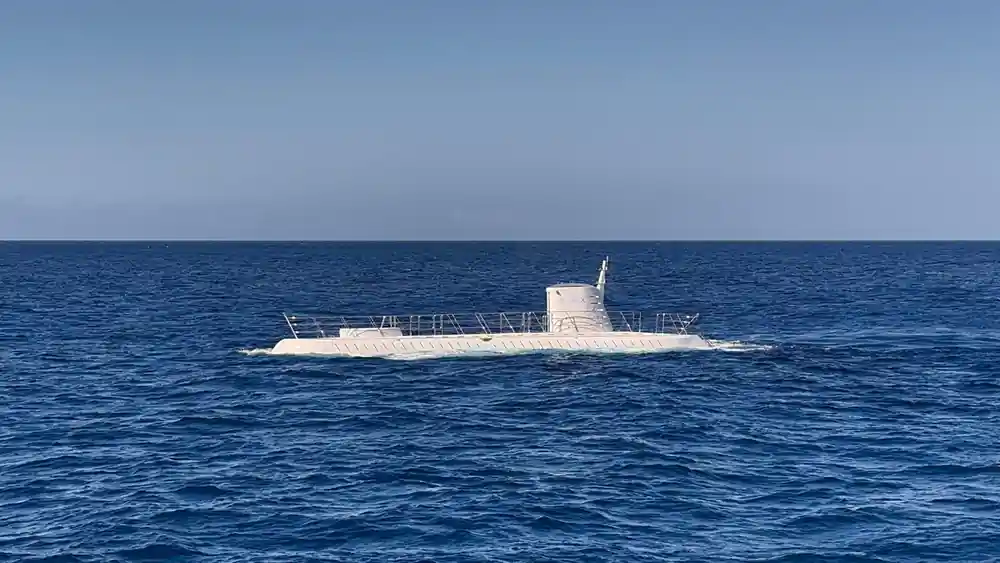

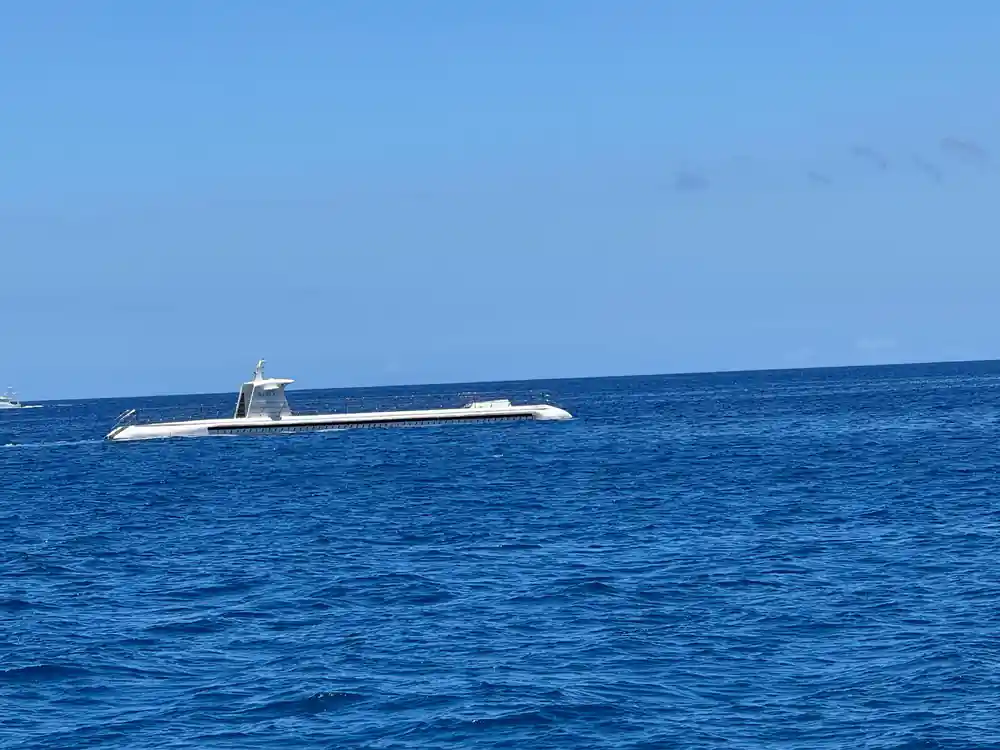









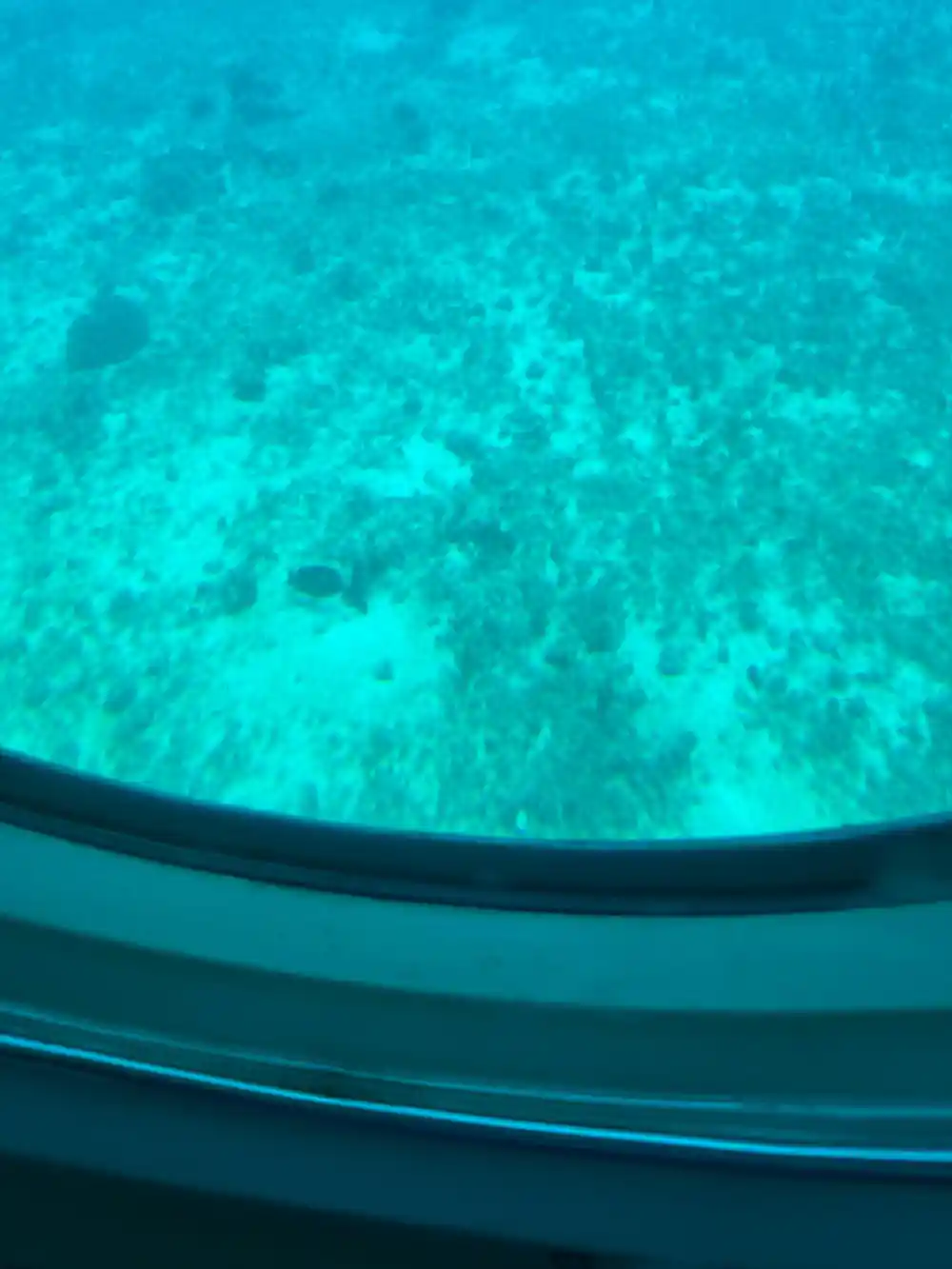
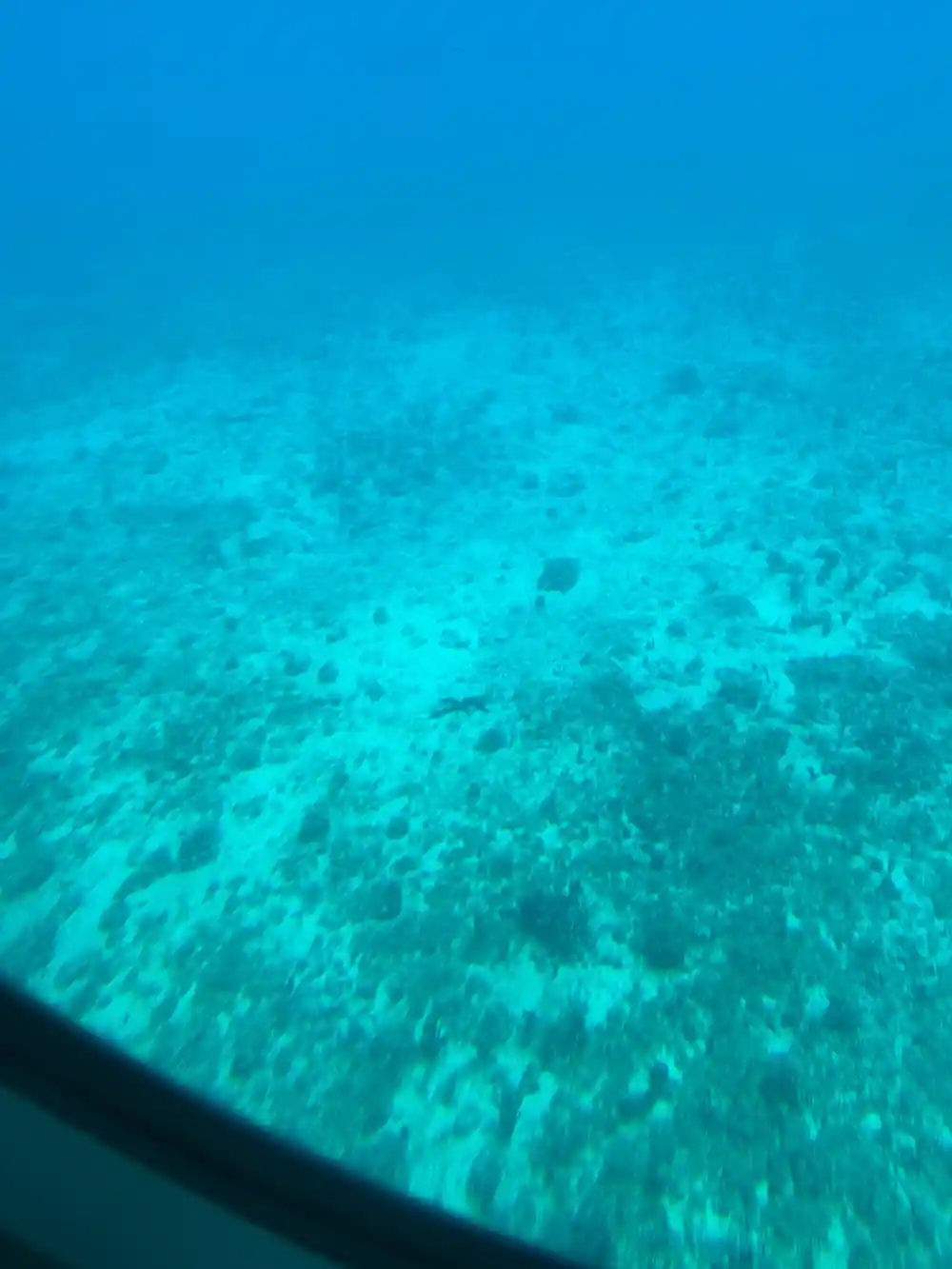
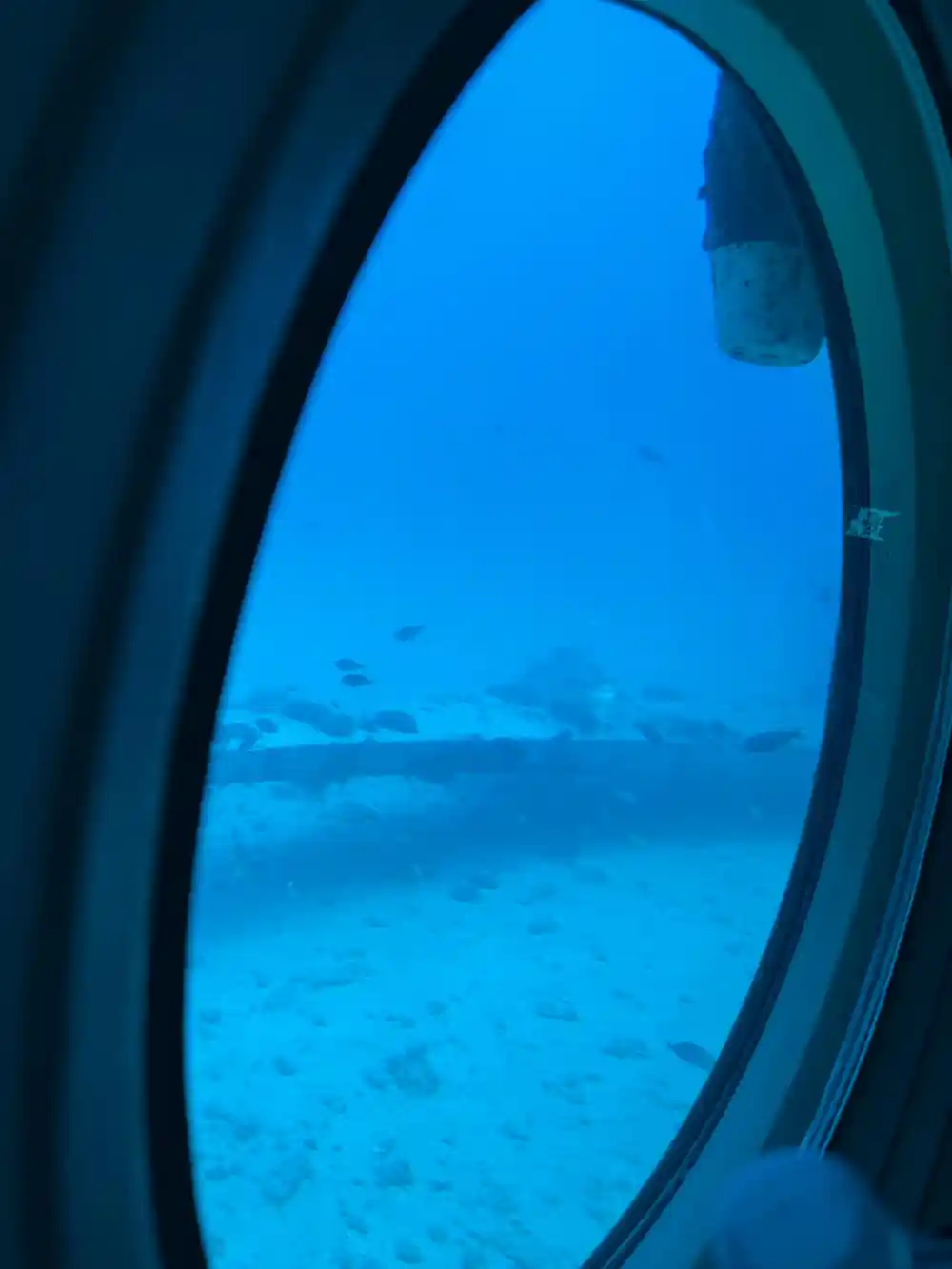
Which submarine this is
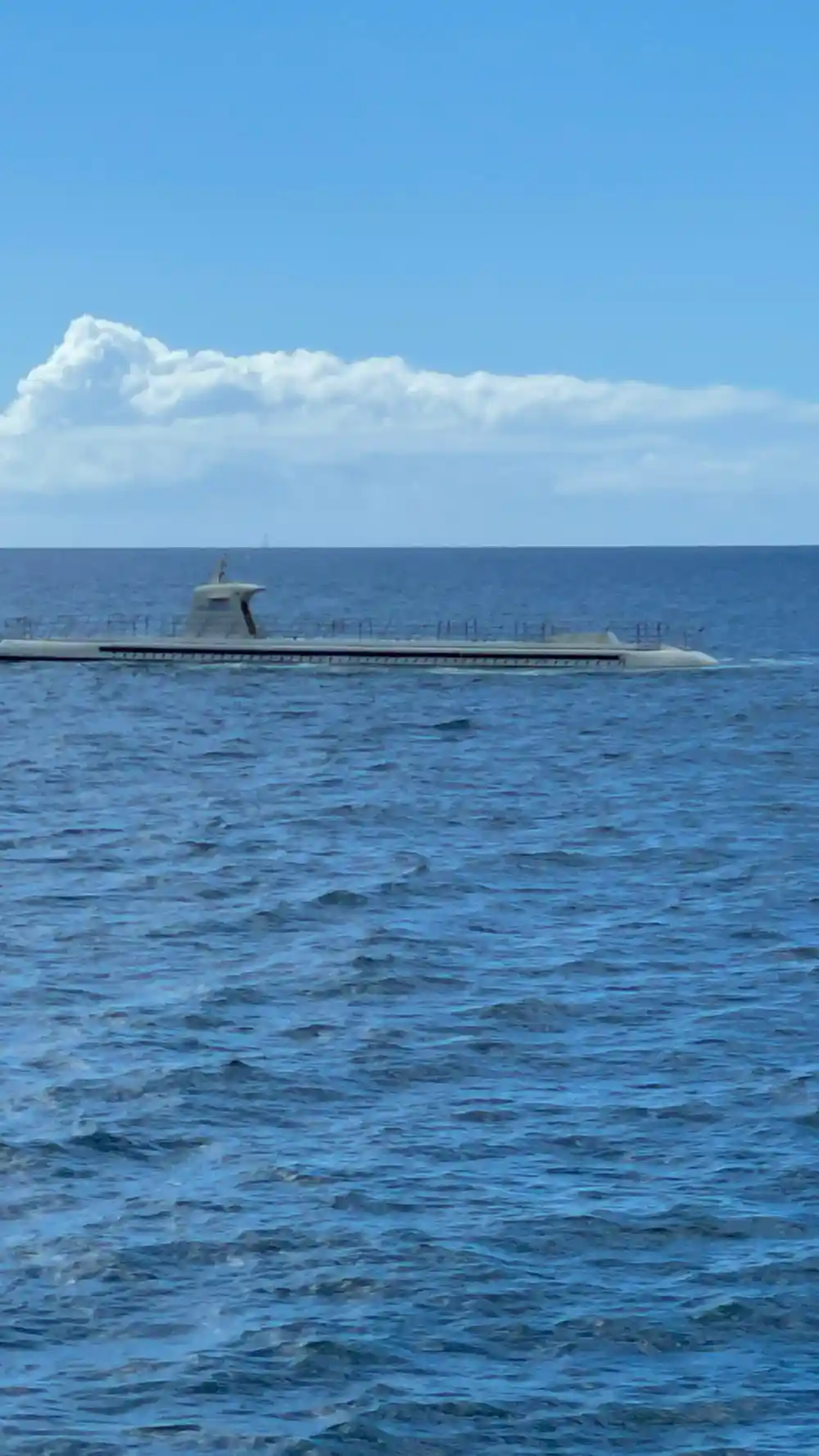
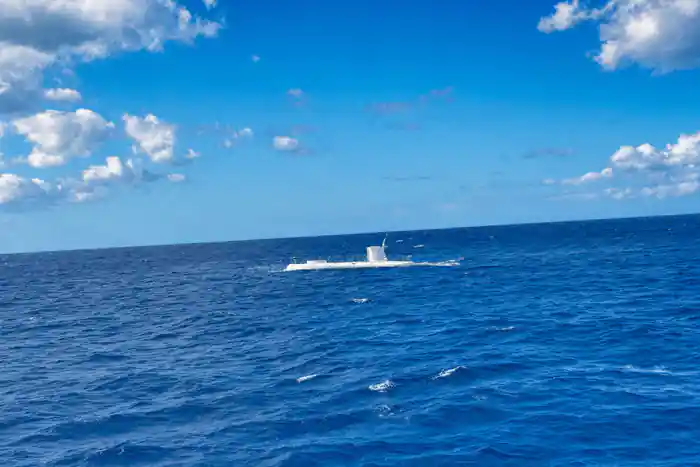
The vessel is Atlantis XIV, and the operator leads with a number: 64 passengers, which is sixteen more than the 48-seat submarines working elsewhere. That sounds like a detail about the company and it is actually a detail about your afternoon.
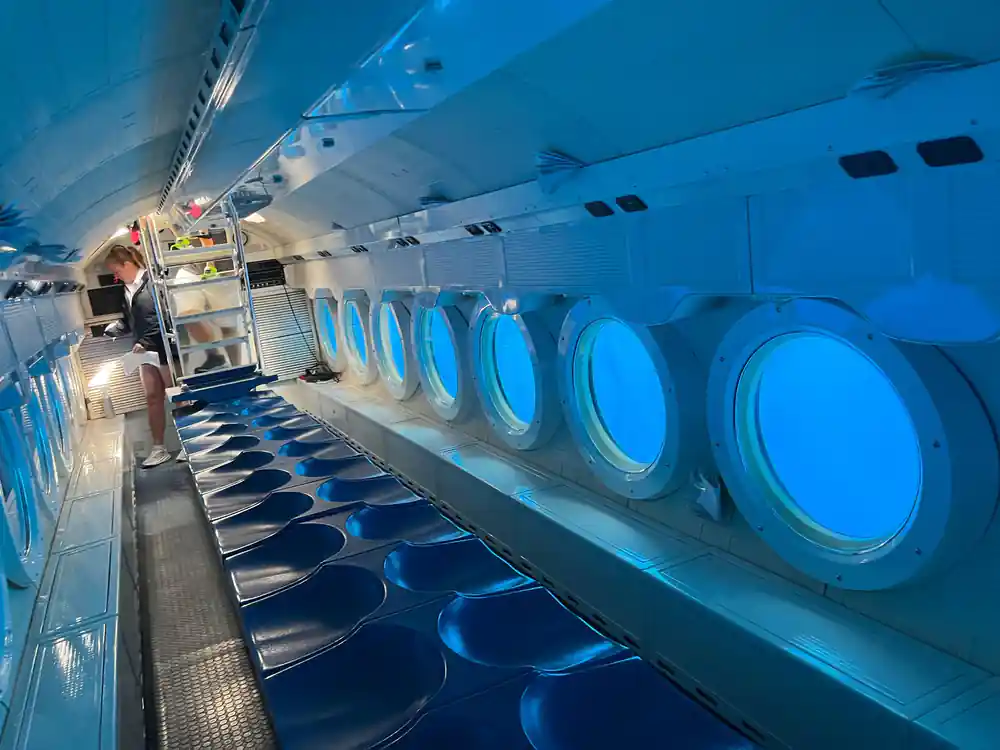
More seats on a boat of this type means more hull, which means more viewports, which means the ratio of windows to people stays comfortable rather than degrading. On a smaller submarine a full load can mean sharing a port; here everyone has one.
It is a genuine submarine rather than a semi-submersible with a glass bottom. It descends under its own power, it operates at depth, and it is flown by a pilot at a control station in the bow with a view forward through a large dome.
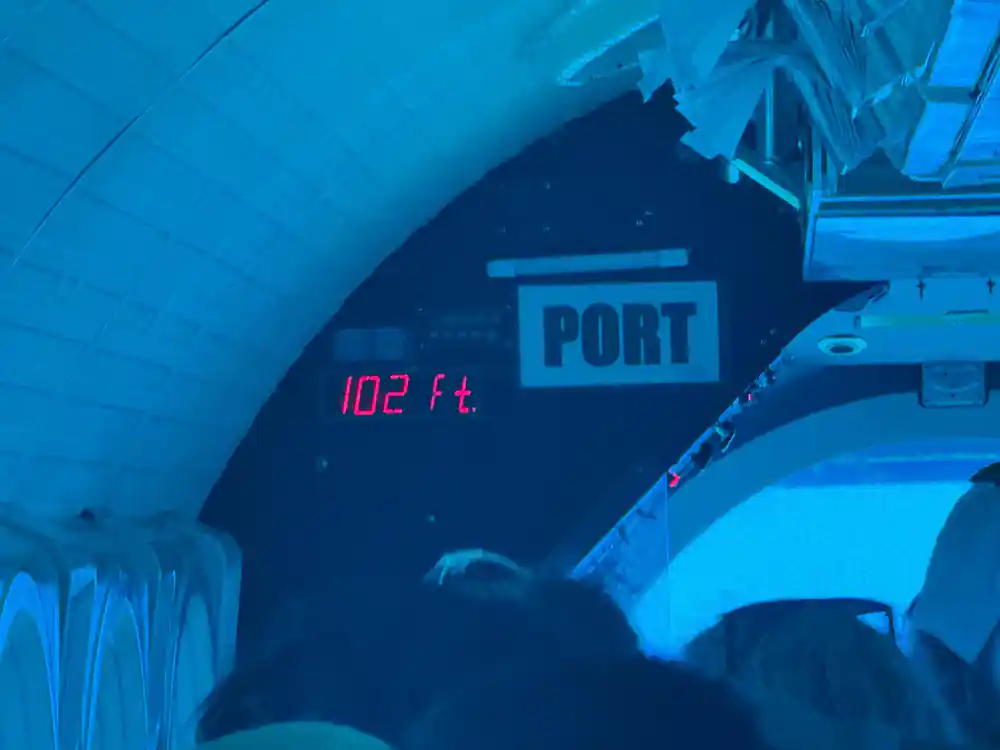
The cabin is pressurised at one atmosphere throughout. Whatever depth the boat is at, the air you are breathing is at the same pressure it was on the pier, which is why nothing happens to your ears and why nobody needs any qualification to be aboard.
The ladder, which decides everything
One condition on the booking matters more than all the others together. Getting aboard means climbing down a ladder of seven steps that is close to vertical, and climbing back up it afterwards, and everyone has to manage that unaided.
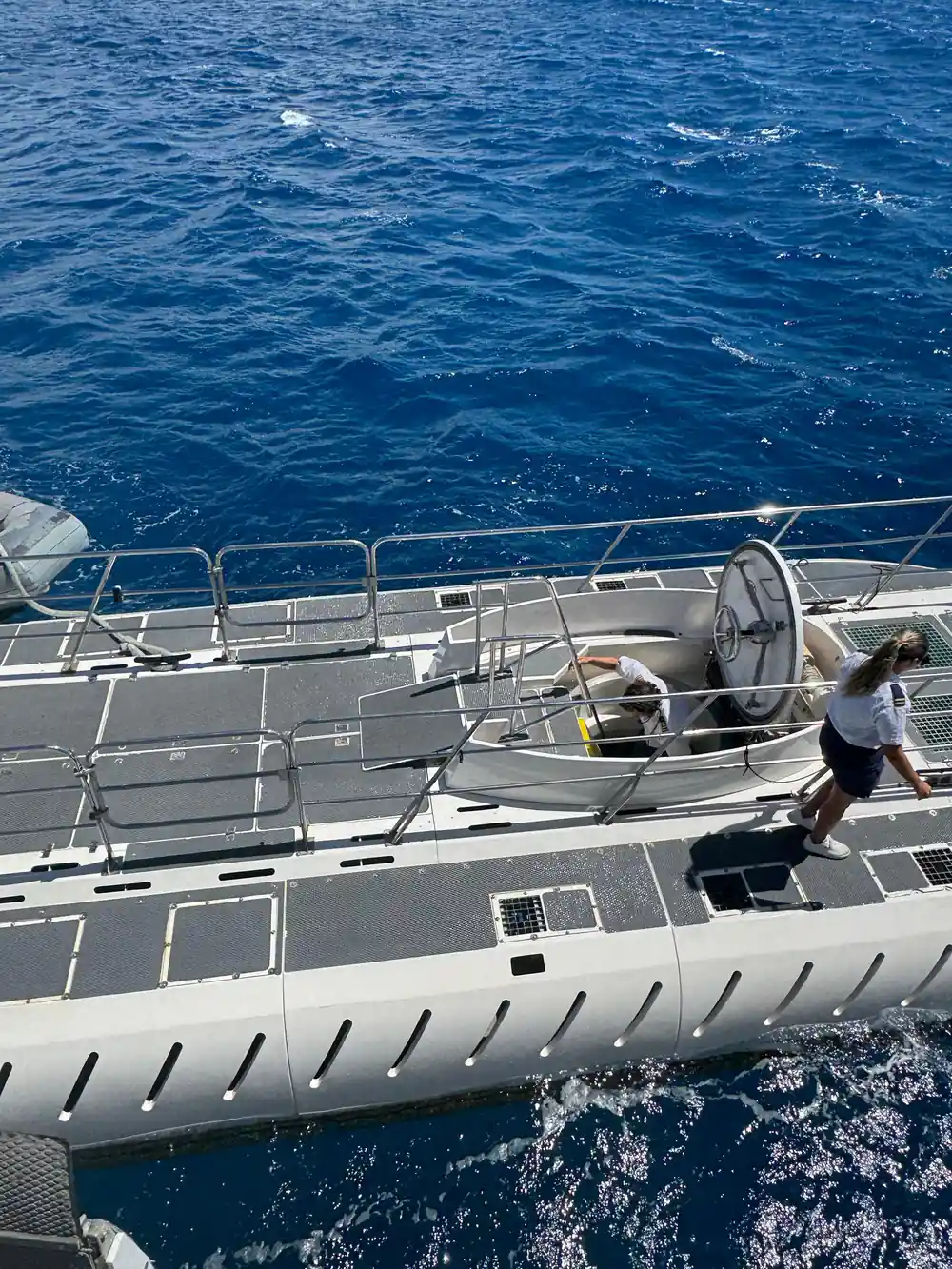
That is not a formality. A submarine is entered through a hatch in the top of the pressure hull, and a hatch has a ladder under it, and a ladder under a hatch is close to vertical because there is nowhere else for it to go. There is no lift, no ramp and no alternative route, and no engineering solution is coming, because the shape of the opening is fixed by what the hull has to withstand.
Independently is the operative word. Crew are present and will steady and guide, but they cannot carry anybody and cannot take somebody's weight. If you cannot manage seven near-vertical steps under your own power, both down and back up, this trip is not available to you.
For everyone else it takes about fifteen seconds and is entirely unremarkable. Face the ladder, use both hands, and wear shoes you can climb in.
Where you actually check in
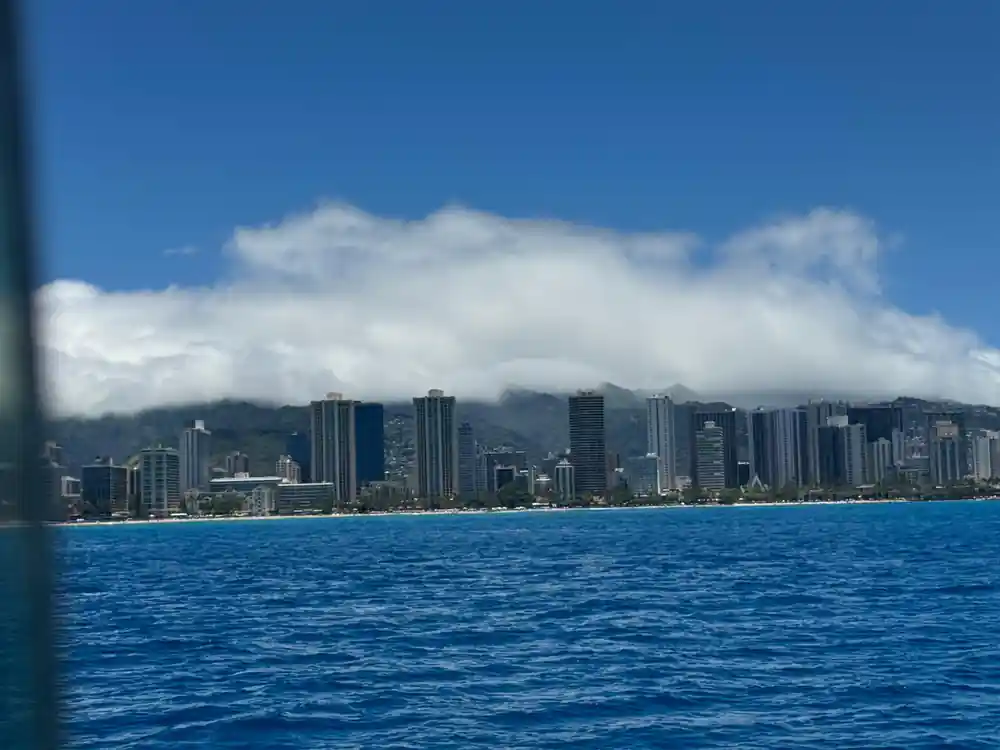
Not at a terminal. Check-in is at the Hilton Pier, in front of the Hilton Hawaiian Village's Ali'i Tower and next to the Tropics Bar, which is inside a very large resort complex on Waikiki.
This catches people out for the obvious reason: a resort of that size takes time to cross, and a pier in front of one particular tower is not something you find by wandering. Locate it in advance rather than on the morning.
Check-in is required twenty minutes before the scheduled time, and that twenty minutes is real. A surface boat leaves the pier to take you out to the submarine, and it does not wait for late arrivals because the submarine it is meeting is on a schedule of its own.
Parking validation is available at check-in for a few hours, which is worth asking about if you have driven.
The boat before the boat
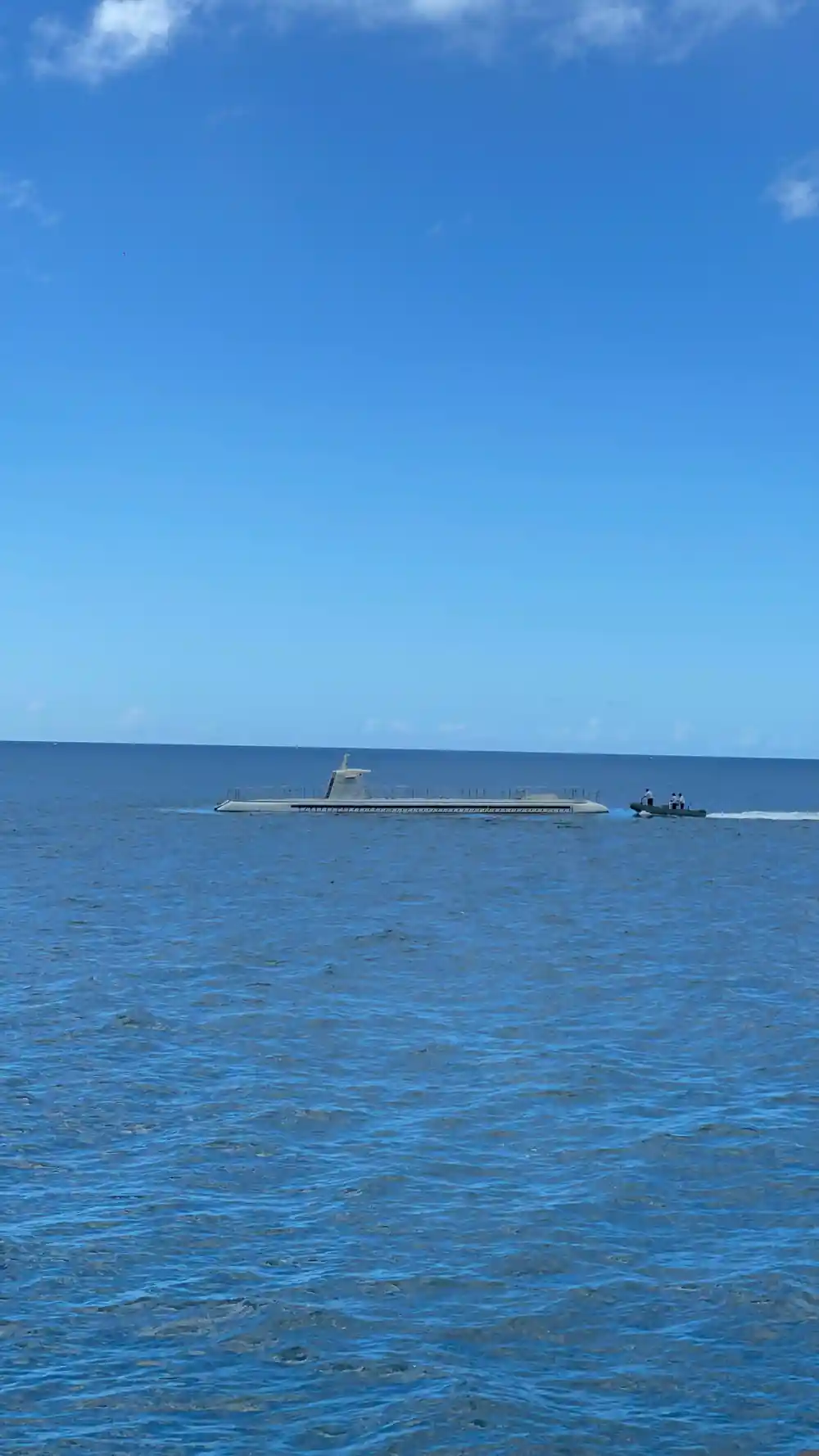
The submarine does not dock at the pier and cannot. It draws too much and belongs offshore, so it stays moored out at the dive site and a surface vessel does the ferrying.
So the shape of the outing is: check in at the pier, board a boat, cross to the submarine, transfer across, dive, surface, transfer back, cross back, disembark. The submarine itself is the middle portion rather than the whole thing.
The crossing is short and the water off Waikiki is usually sheltered, but it is open sea and it moves. Anyone who is reliably seasick should treat this as a boat trip with a submarine in the middle rather than as a submarine trip, and take whatever they normally take, in advance rather than on the water.
The transfer between the two vessels is done alongside, in the open, and is the other moment where reasonable mobility matters.
Inside, and whether it feels closed in
It is the most-asked question about any submarine and the answer here is: much less than people fear, and for a specific reason.
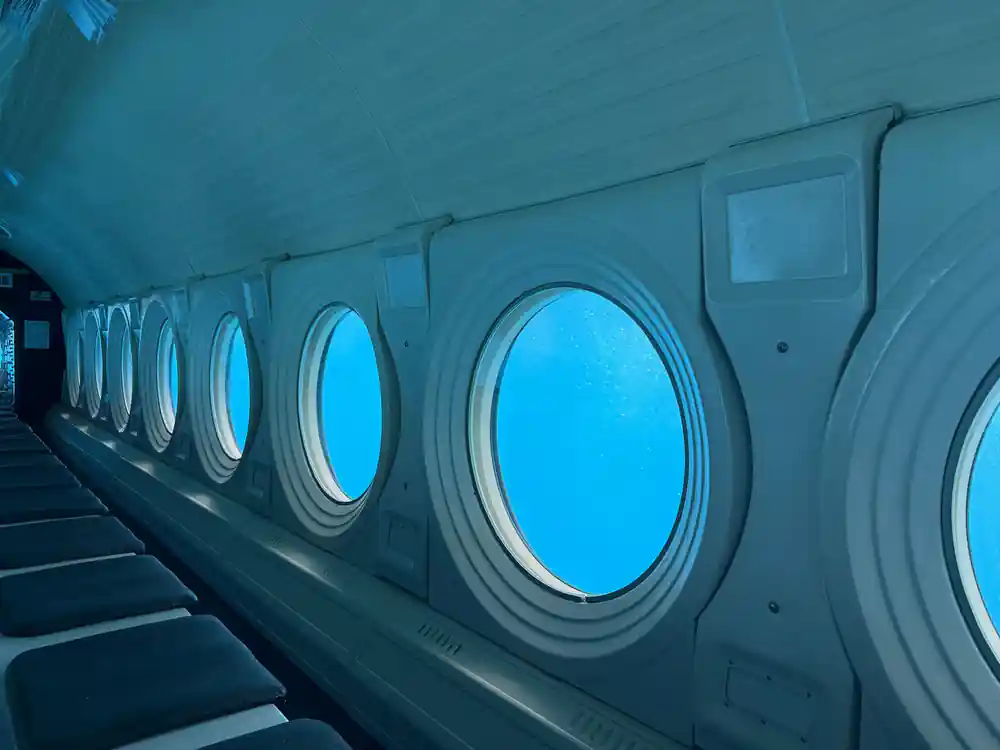
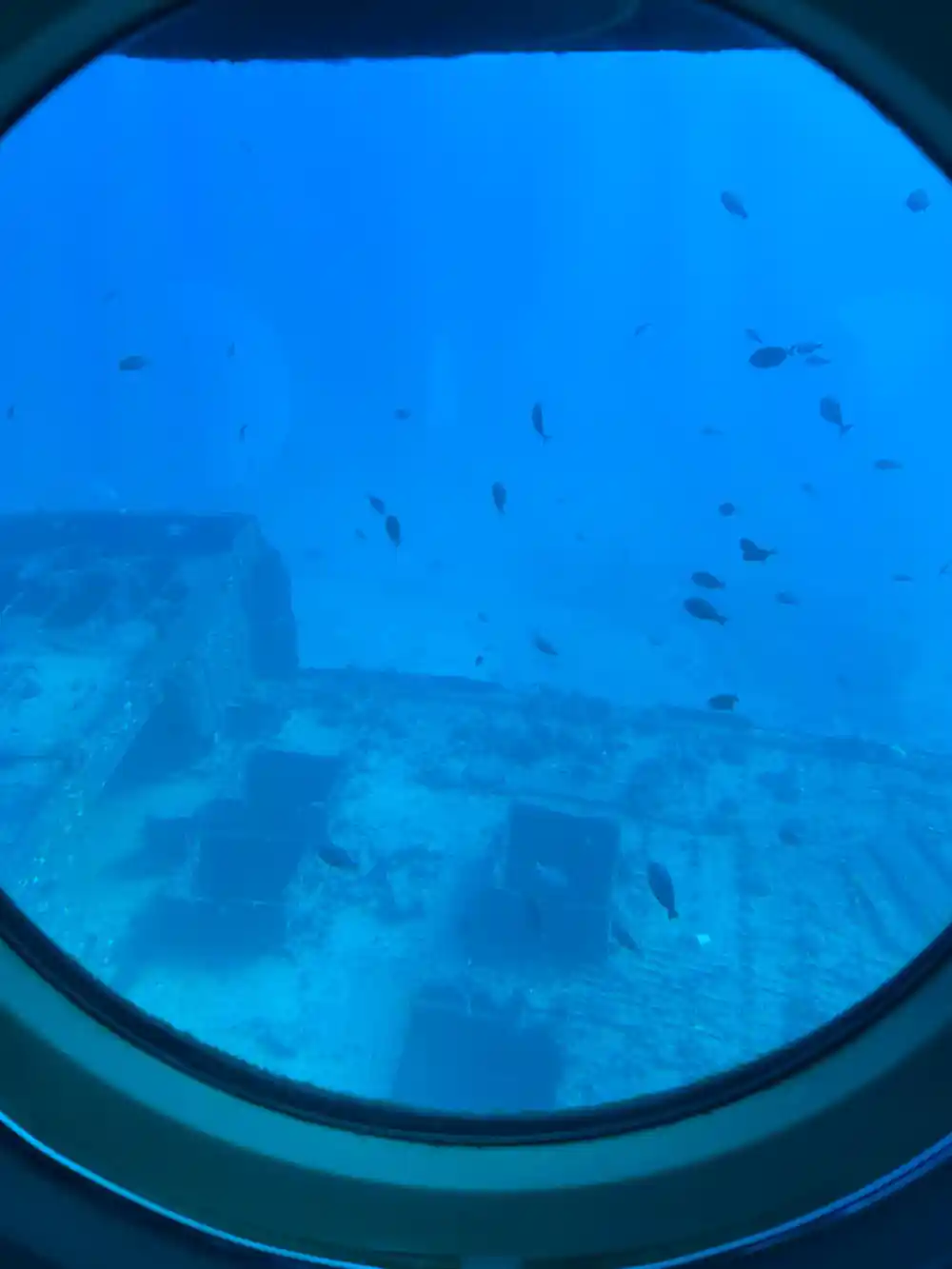
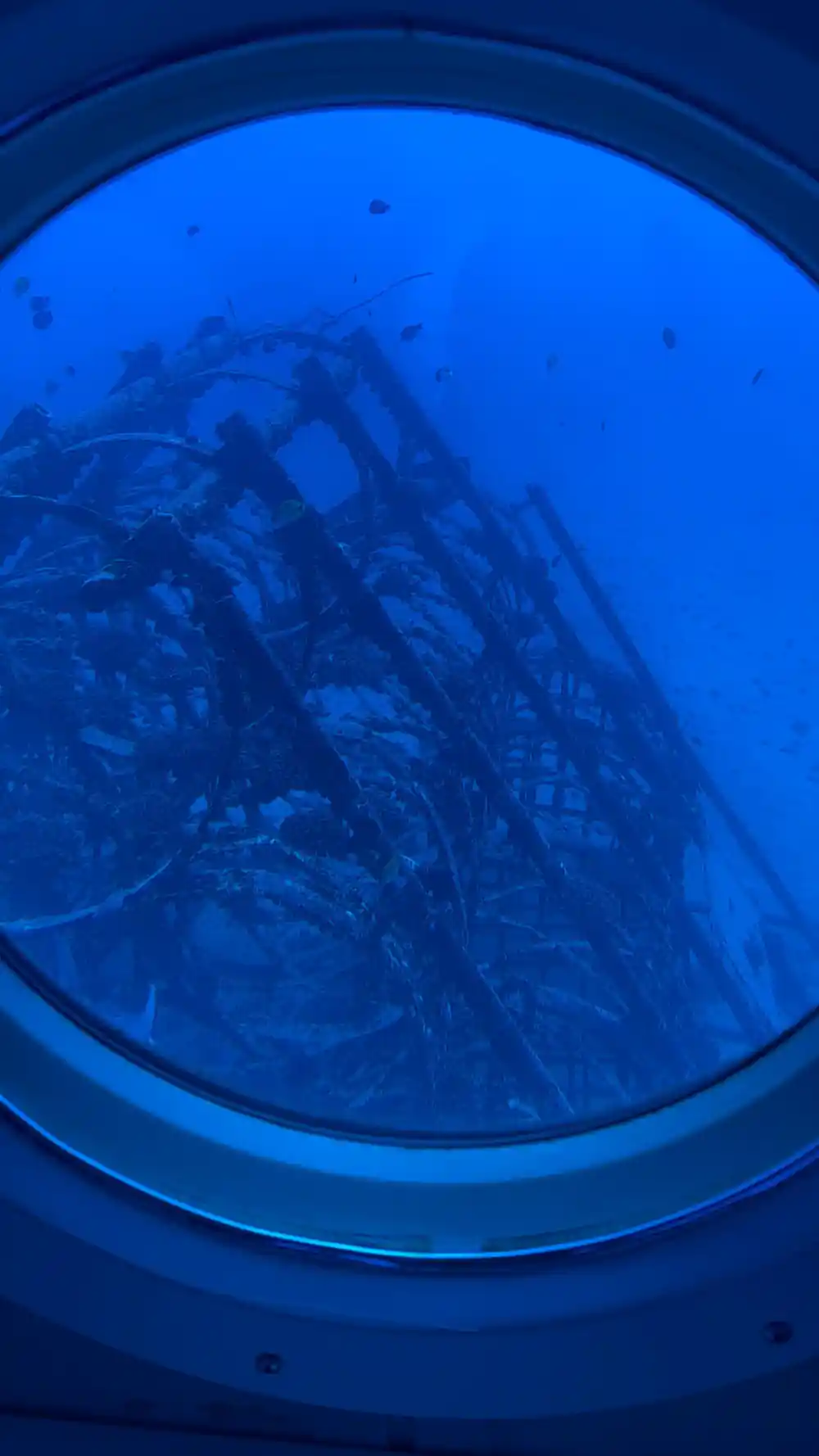
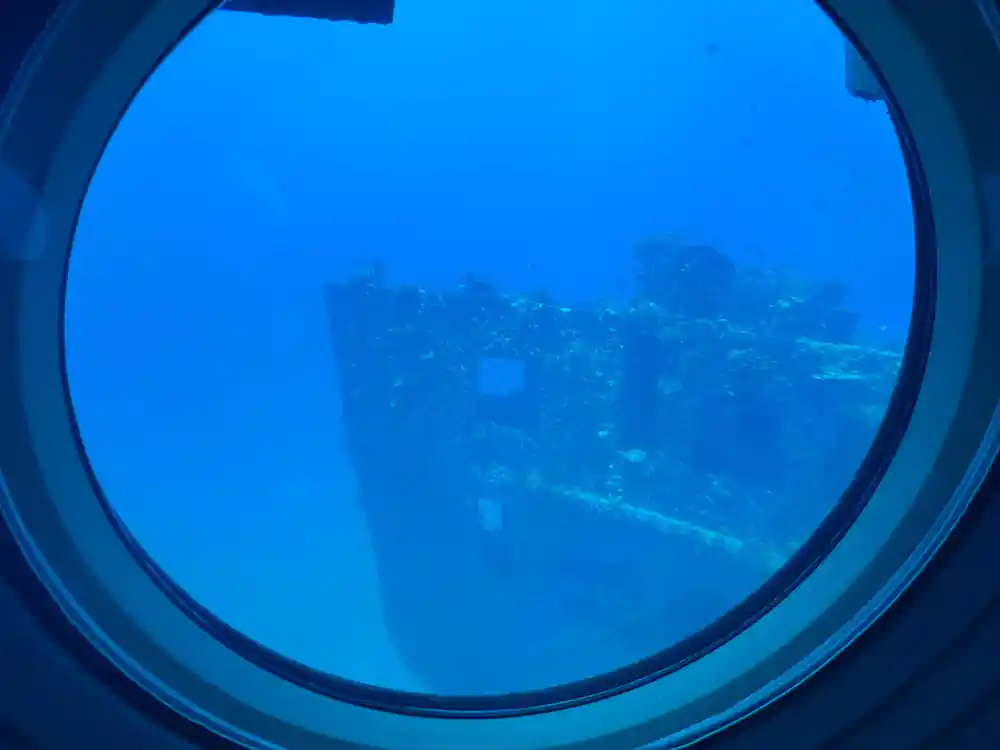
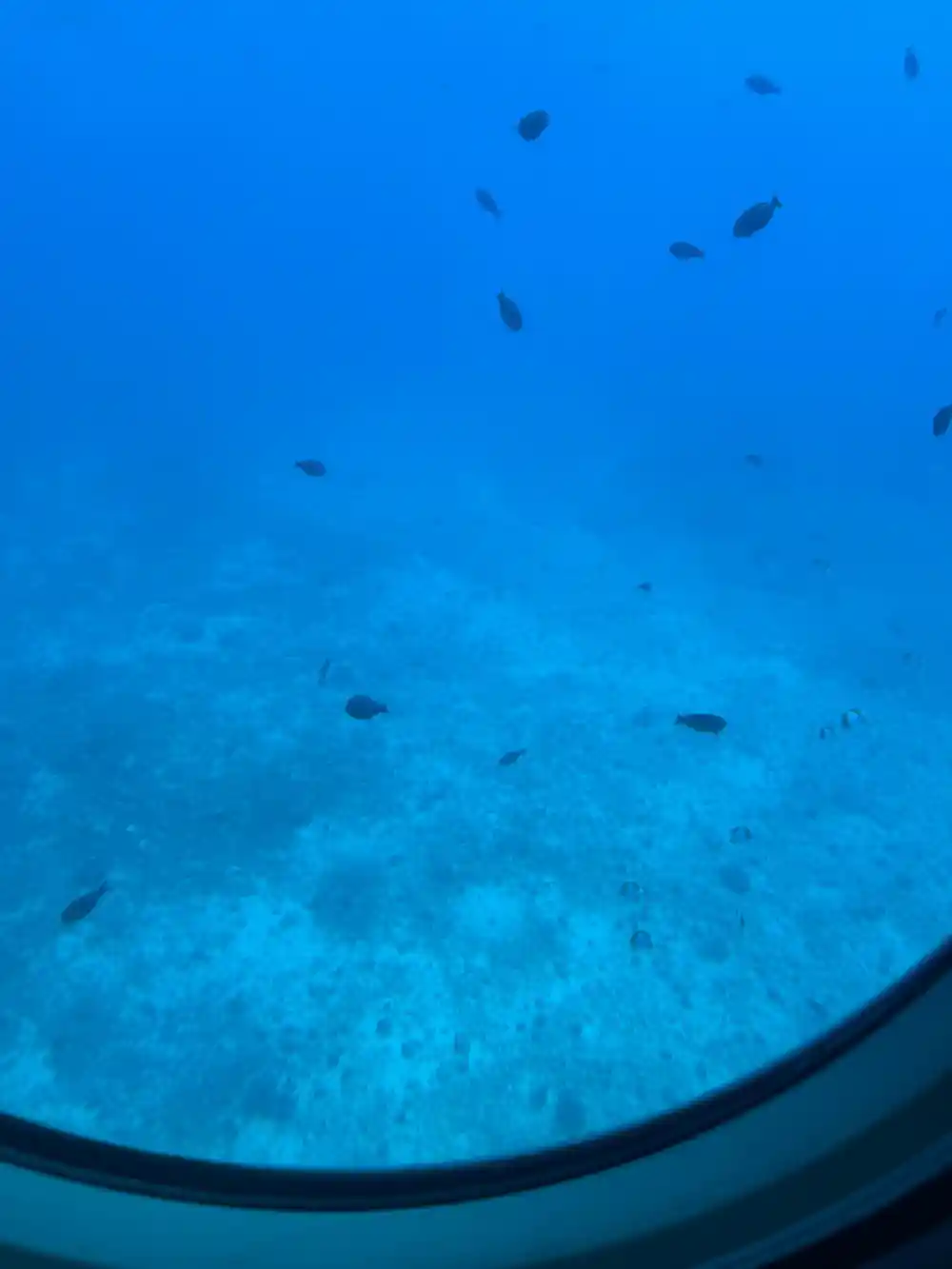
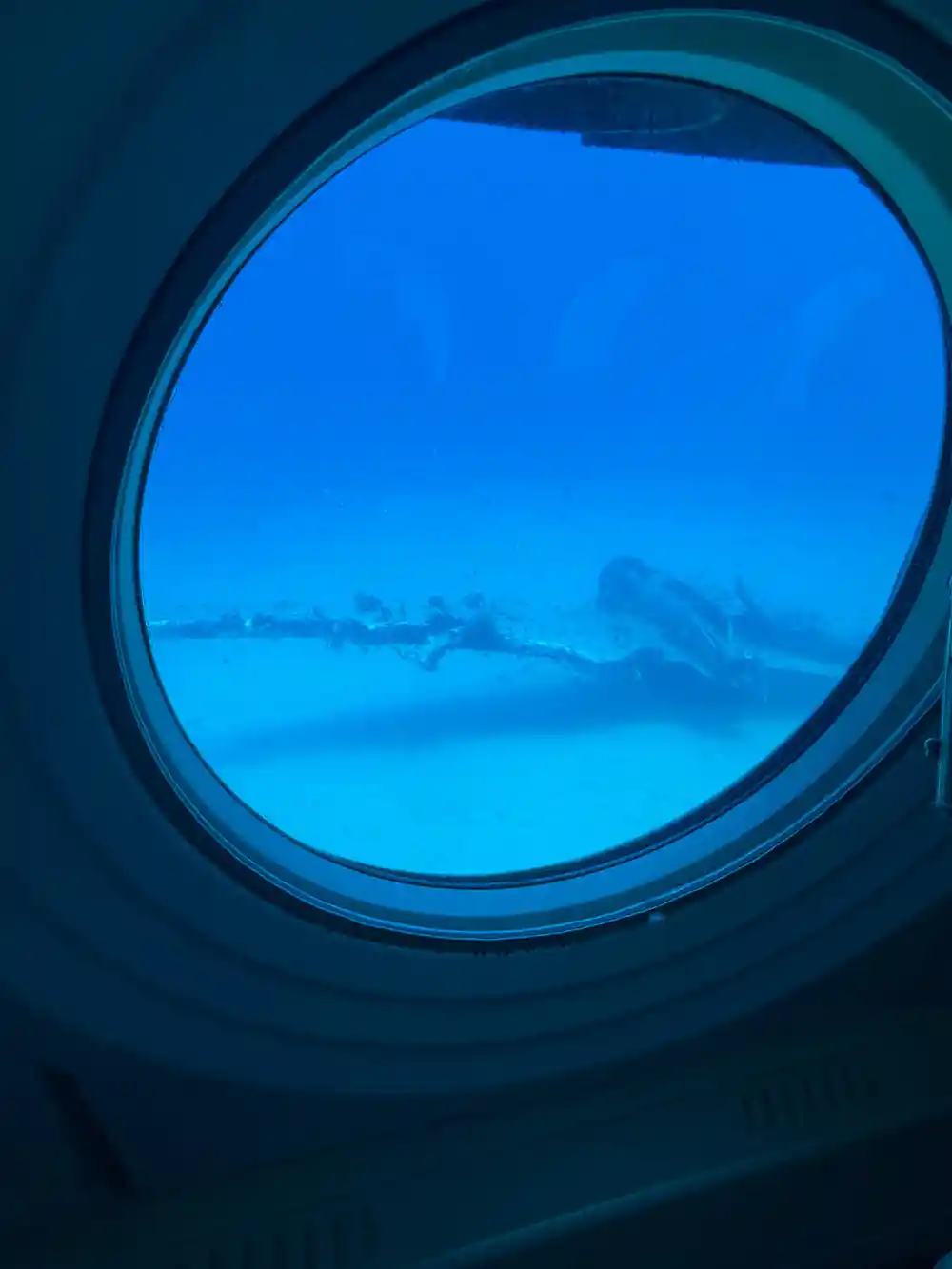
Claustrophobia is largely a response to not being able to see out and not being able to leave. This cabin gives you a large round viewport at your own seat, showing open water and daylight, for the entire dive. Seating is arranged back to back down the centre with everyone facing outward, so nobody is in an interior seat and nobody is looking at a wall.
It is also lit, air-conditioned and wider than the tube people imagine. And it stays at surface pressure, so there is no equalising, no popping and no physical reminder that you are anywhere unusual.
The honest caveats: it is a sealed vessel and you cannot get off in the middle, there is no toilet aboard, and if you have a serious diagnosed claustrophobia this is still a sealed vessel. Everyone else is generally surprised at how ordinary it feels.
Where the time goes
An hour and forty-five minutes, door to door, and the arithmetic is worth doing before you plan around it.
Twenty minutes of that is check-in before the advertised start. Then the crossing out, the transfer, the dive, the transfer back and the crossing in. The submarine portion is the middle third rather than the whole, which is not a criticism but is worth knowing if you are comparing durations between operators.
It fits a morning comfortably and leaves the rest of the day intact, which is unusual among excursions and is one of the better arguments for it.
What moves it is sea state rather than season. It runs all year, and the thing that cancels a departure is the water rather than the calendar.