The quick version
- The cabin is strongly air-conditioned and you sit still in it.
- Seven near-vertical steps and a step between two moving boats.
- Both are needed on the ladder rails.
- Lens against the glass, and then put it away.
The operator's own list, explained
The booking names two things to bring: comfortable shoes, and a jacket. Both look like generic advice and neither is. They are each solving a specific problem, and knowing which makes them easy to get right.
The jacket is about the cabin, which is air-conditioned to a degree that surprises people in a tropical country.
The shoes are about the ladder, and about a step between two vessels that are both moving.
Everything else on this page follows from those two facts.
The jacket
A sealed hull containing sixty-four people, lighting and machinery has to be cooled hard, and the result is a genuinely cold room. Then you sit still in it, in whatever you wore to walk across a beach resort.
The proportion of passengers who mention being cold is high, and it is entirely avoidable with any light layer at all: a fleece, a hoodie, a light windproof. It goes in a bag or over an arm for the ten minutes you are outside and it earns itself for the hour you are not.
This is the single most useful line on the page and it is also the one people most often ignore, because bringing a jacket to Waikiki feels absurd right up until the moment it does not.
The shoes
Closed, with a sole that grips. Trainers are ideal and almost anything with a back and a tread will do.
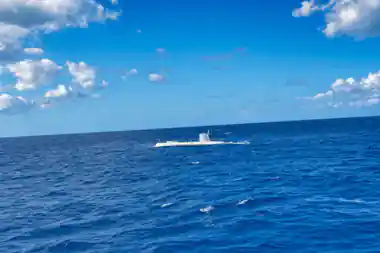
The reason is the seven-step near-vertical ladder into the hull, which every guest climbs unaided, and the step between the surface boat and the submarine casing, which happens on water with both vessels moving.
Flip-flops and backless sandals are a poor choice for both. They come off on metal rungs and they slide on a wet deck, and this is one of the very few beach outings in Hawaii where the footwear genuinely matters.
For the same reason, avoid anything long and loose around the legs. A vertical ladder with people above and below you is not the place for it.

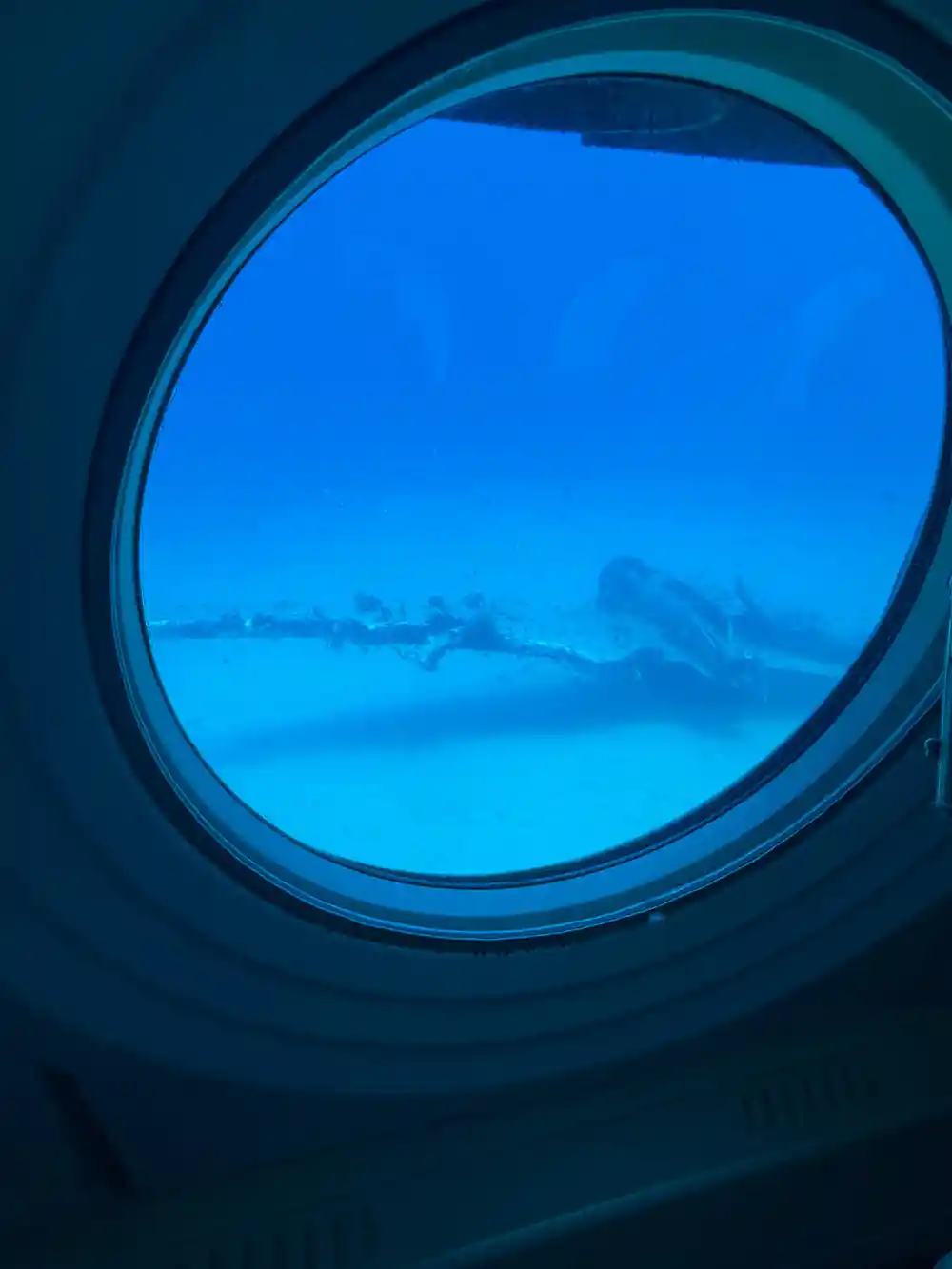
A passenger photographing through the viewport glass
Cameras, and what actually works
Bring one if you want one, and use it in the first few minutes rather than throughout.
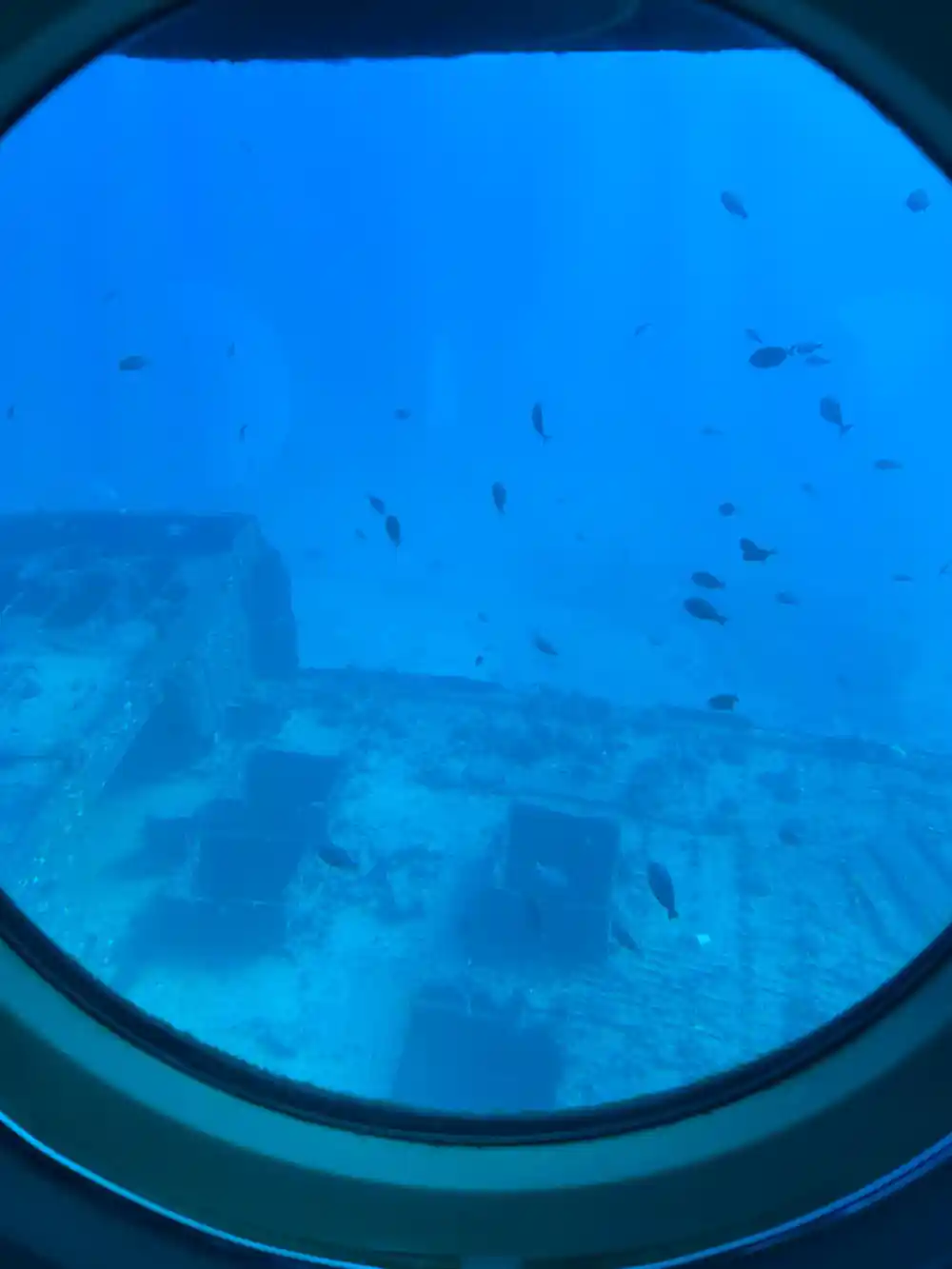
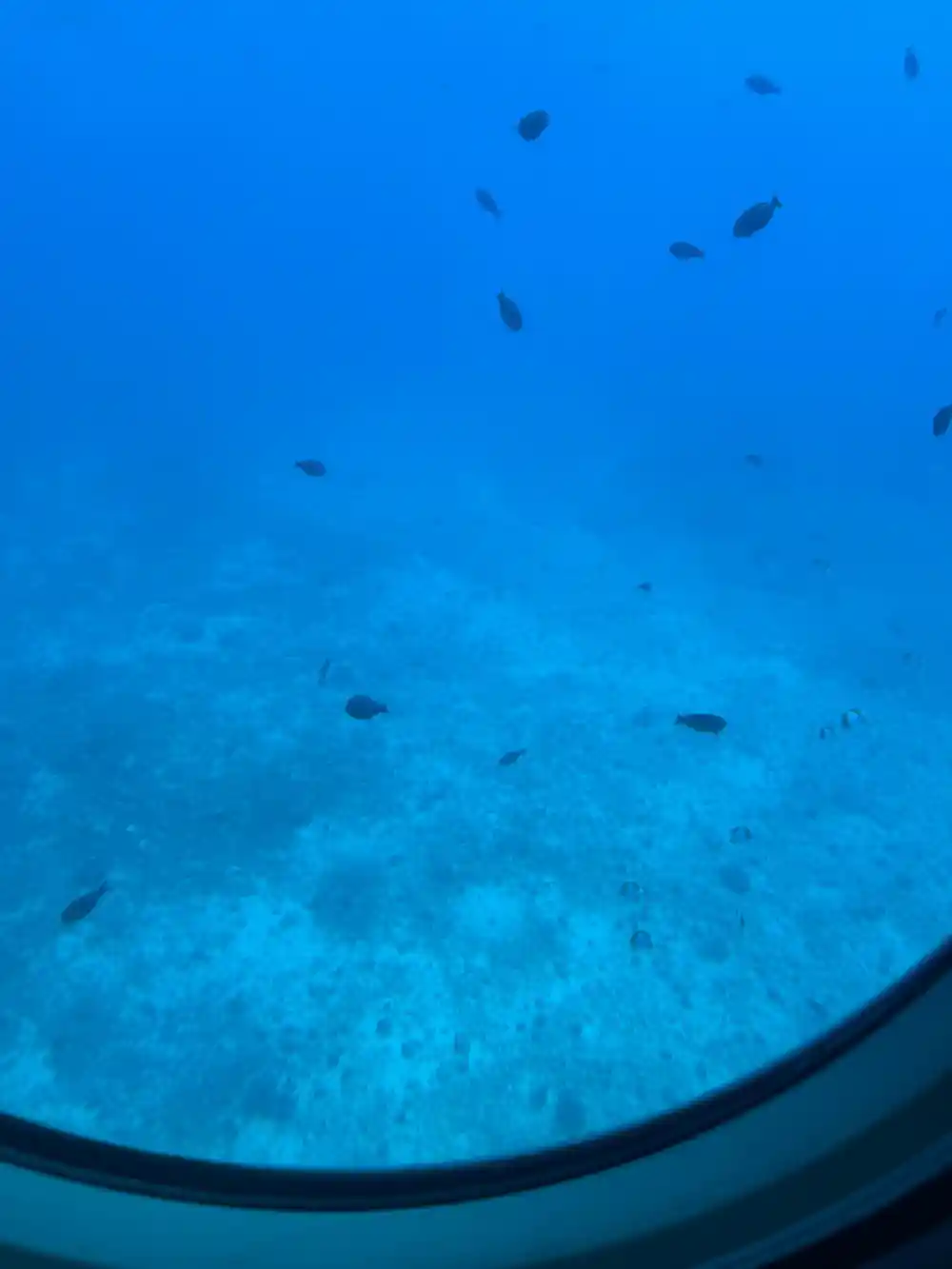
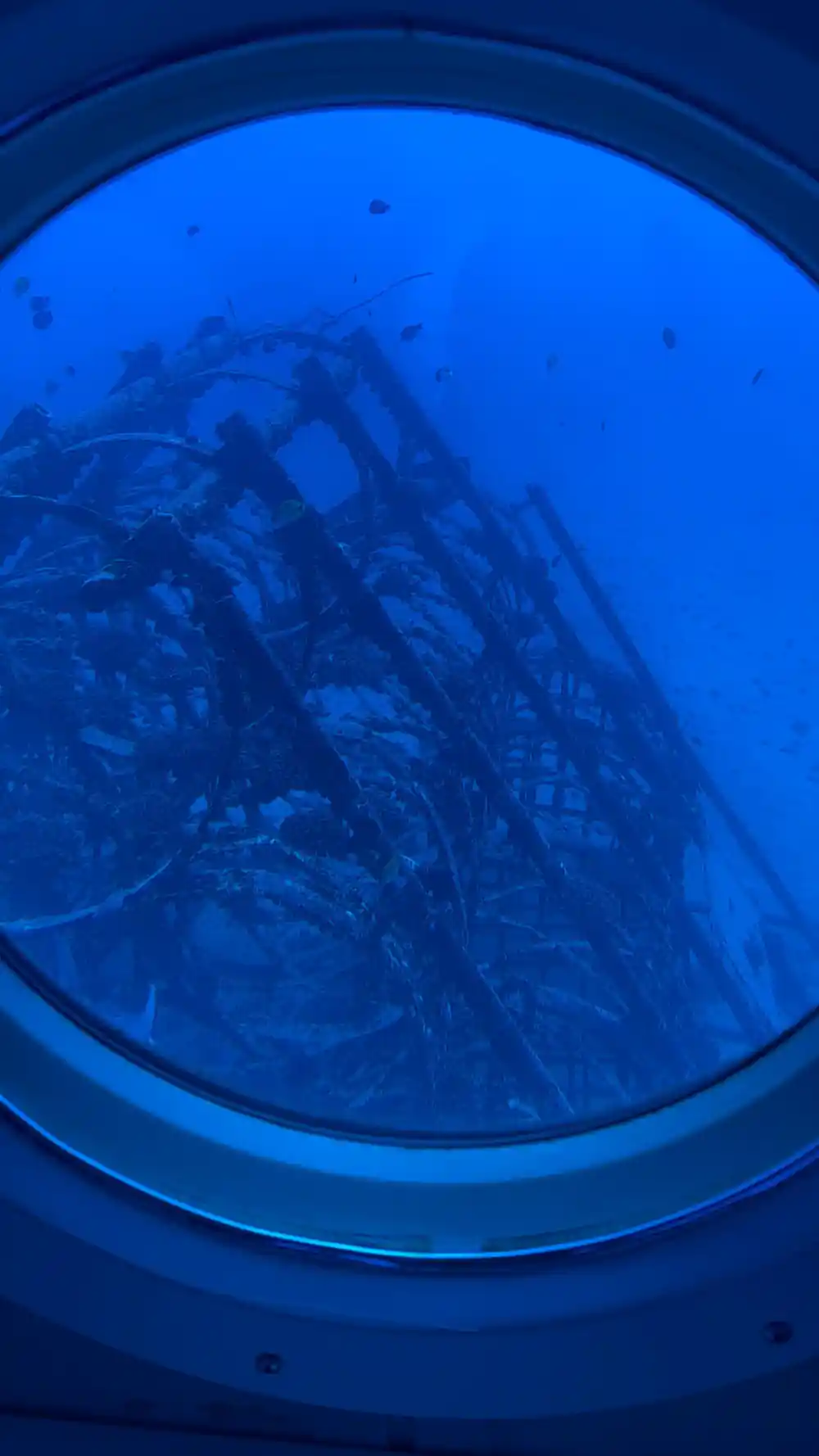
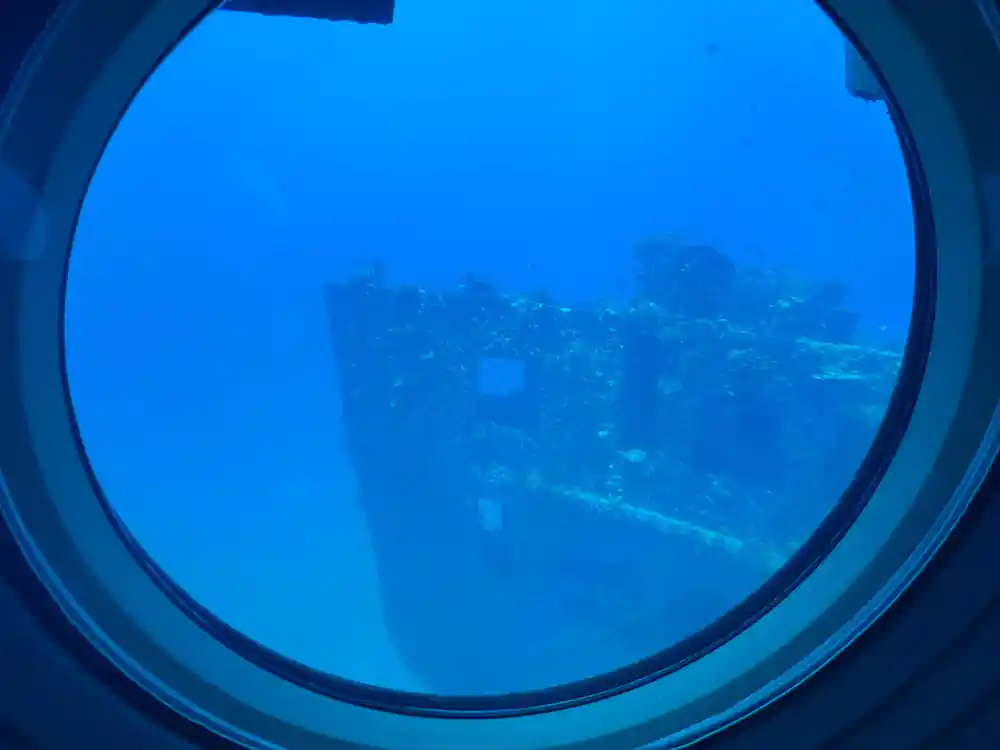
The single most useful technique is to put the lens flat against the viewport glass. A lit cabin reflects hard off a curved inner surface, and pressing the lens to it eliminates almost all of that. It is the difference between a photograph of a wreck and a photograph of the inside of the cabin.
Turn the flash off. It will not reach anything outside the window and it will bounce straight back off the glass into your own picture.
Expect everything to come back blue. At a hundred feet the water has removed the red end of the spectrum entirely, so a phone will produce blue-grey images no matter what it does. Some editing afterwards restores a surprising amount.
And then stop. The dive is the middle third of a short trip and the people who come up describing it most vividly are not the ones with the most photographs.
What not to bother with
There is a short list of things people pack for this and then carry pointlessly around a submarine.
A towel, a swimming costume and anything else aquatic. You do not touch the water at any point in this trip, and nothing gets wet except possibly your shoes on a deck.
Snorkelling gear, for the same reason, and because there is nowhere to put it.
Binoculars. At a hundred feet the limit on what you can see is the water rather than magnification, and inside a cabin they are useless.
A large beach bag. You are carrying it down a vertical ladder and putting it somewhere at a seat, and the smaller it is the better the whole experience.
And a second camera. One is plenty on a dive where the advice is to take a few photographs early and then look at the ocean.
The rest of it
Sunscreen for the crossing, if you are going to be on deck. It is a short exposure and Hawaiian sun is Hawaiian sun.
Sunglasses for the same reason, and to make the transition back into daylight less startling at the end.
A small bag rather than a large one. You carry it down a ladder and there is limited room at your seat, so a day pack is workable and a suitcase-sized beach bag is not. Whatever you take, it should not need holding while you climb.
Use the toilet at the pier. There is none aboard the submarine, and although the trip is short it is not that short.
And do not bring anything you would mind losing on a boat. Between two transfers and a ladder there are several opportunities for something loose in a hand to end up in the Pacific.
What is provided, and what is not
Provided: the dive, commentary throughout, and an app associated with the booking.
Not provided: hotel pickup and drop-off, which is the item most often assumed to be included and is not. Reaching the Hilton Pier is your own arrangement, whether that means walking, a taxi or driving and buying parking validation at check-in.
Also not provided: tips, which are noted as excluded and are at your discretion.
There is no equipment of any kind to be issued, because there is nothing to wear. You board dressed as you are, sit down, and look out of a window, which is the whole appeal of this way of going underwater.
A jacket, closed shoes, and hands free
from US$168Reserve now & pay later