The quick version
- About 92 centimetres. A height rule, not an age one.
- Seven near-vertical steps, both directions, under your own power.
- A ticket category, separate from the height rule.
- You never touch the water at any point.
Two hard rules and everything else
This trip has an unusually short list of restrictions, and the two that exist are both absolute.
The first is height: children must be at least 36 inches, roughly 92 centimetres, to ride. The second is the ladder: every guest must independently climb seven near-vertical steps into and out of the vessel.
Everything else that people worry about turns out not to apply. There is no swimming, no equipment, no qualification, no pressure change, no exertion once seated and no exposure to weather beyond a short boat crossing.
So the useful approach to this page is to check yourself against two specific things rather than against a general sense of whether you are up to it.
The height rule, and why it is height
Thirty-six inches is the minimum, and it is expressed in height rather than age deliberately.
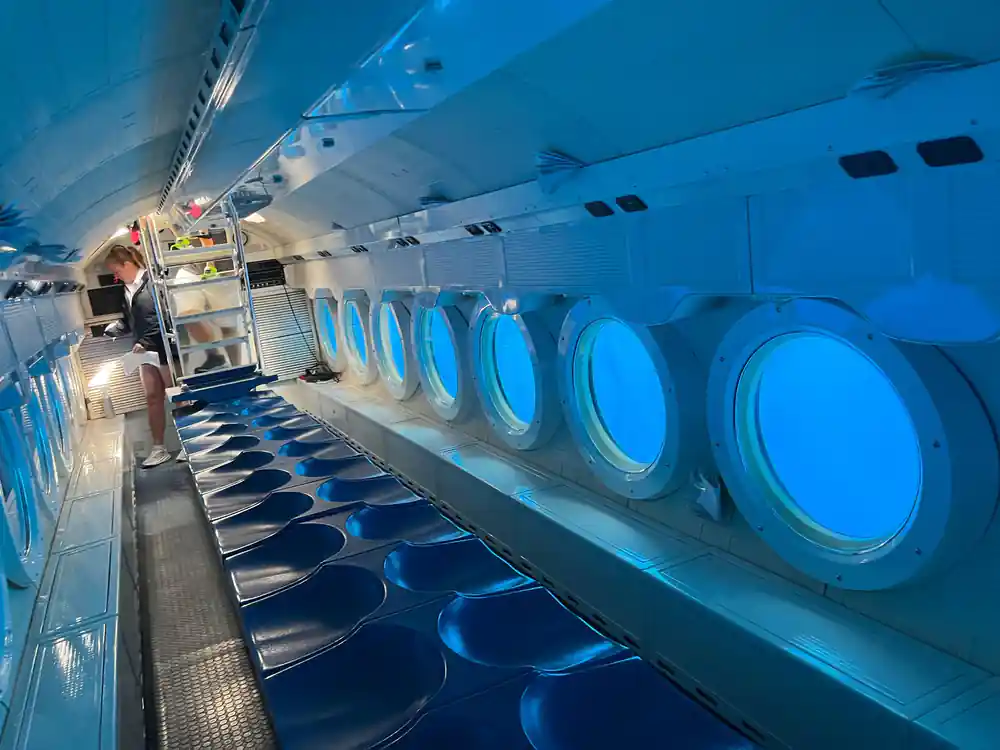
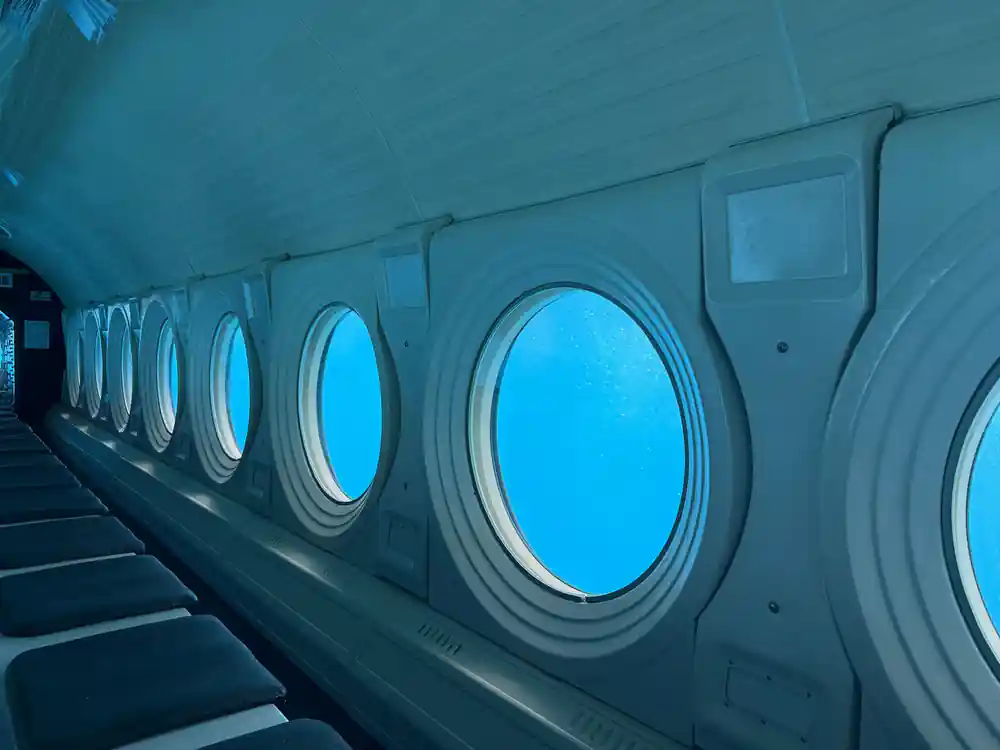
A submarine cabin is fitted out to a fixed geometry: seats at a set height facing viewports at a set height. A child below a certain size cannot see out of the window they have been given, which converts an extraordinary experience into an hour in a cold room. The rule protects the child's experience as much as anything else.
It also relates to the ladder, and to being able to move about a cabin safely.
Measure before booking, with the shoes on, and do not round up. A child a fraction under the line is a conversation at the pier that nobody enjoys, and the operator cannot make an exception for a rule about whether somebody fits the boat.
Separately, children's tickets apply to ages twelve and under. That is a ticket category rather than an eligibility one, and the two are easy to confuse.
Mobility, and the honest answer about wheelchairs
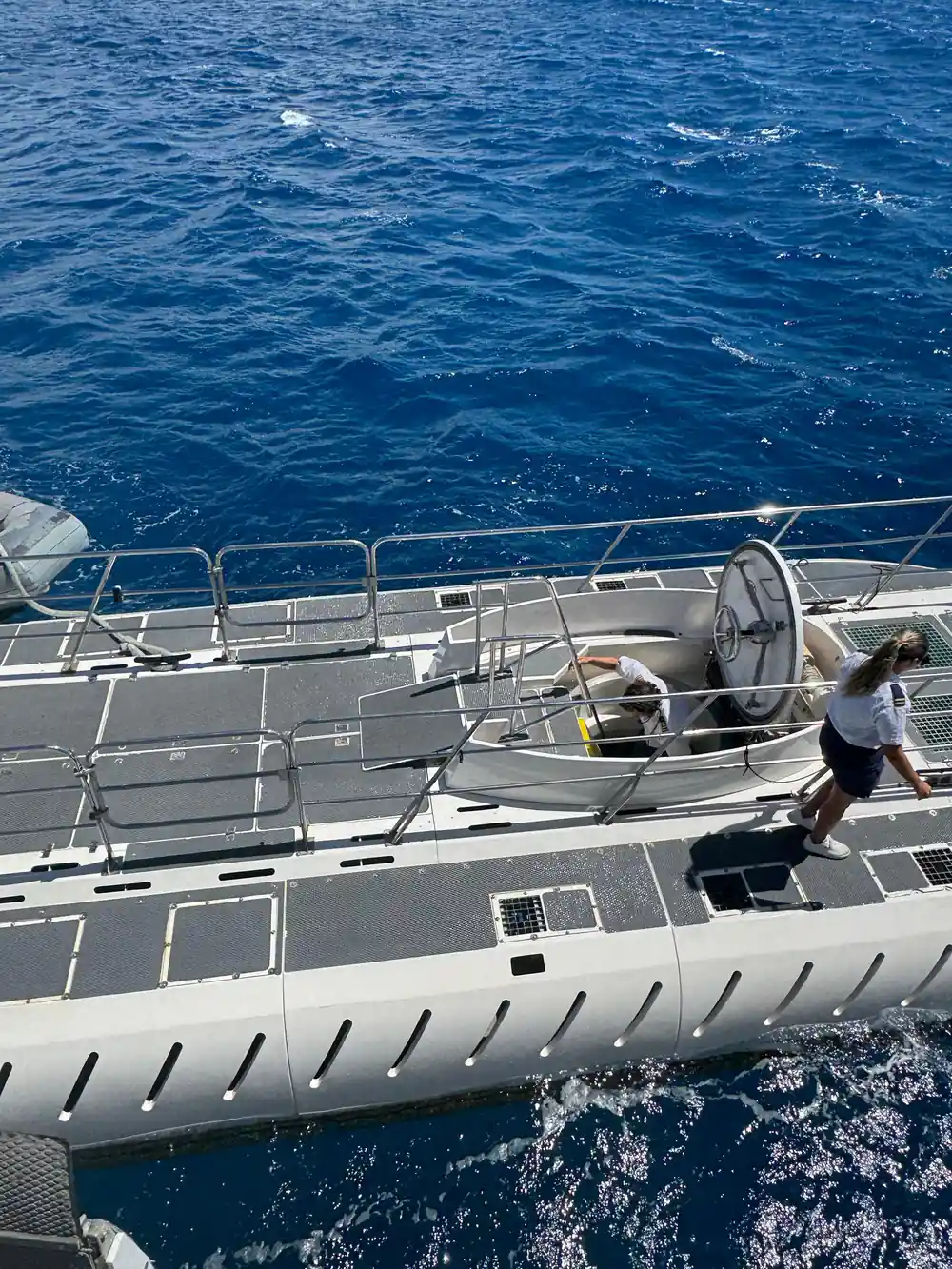
The ladder is the constraint and it is a hard one. Everyone descends and ascends under their own power, with crew steadying but not lifting.
For a wheelchair user, or anybody who cannot manage seven vertical steps unassisted, this trip is not available. That is not a policy that can be waived, because a pressure hull cannot be given a different entrance, and it is worth saying plainly rather than leaving somebody to discover it offshore.
For people with limited but real mobility - a stiff knee, reduced grip, a fear of ladders rather than an inability - the answer depends on specifics, and the right move is a direct conversation with the operator before booking. This comes up for them all the time and they will answer it straight.
The question to test yourself against is the return trip rather than the outward one. Getting down a ladder is easier than getting up it, and you have to do both.
A child at a viewport, pointing at something outside
The things that turn out not to matter
You do not need to swim. At no point are you in the water, in a wetsuit, or at any risk of being in the water. This trip is one of the very few ways a non-swimmer can look at a reef at depth, and a good number of passengers are exactly that.
You do not need a diving qualification, medical clearance or any experience. The cabin is at surface pressure throughout, so none of the physiology that governs diving applies to you.
Your ears will do nothing. There is no equalising, no popping, no discomfort at any depth.
Age has no upper limit. The determining factor for an older passenger is the ladder, not the years.
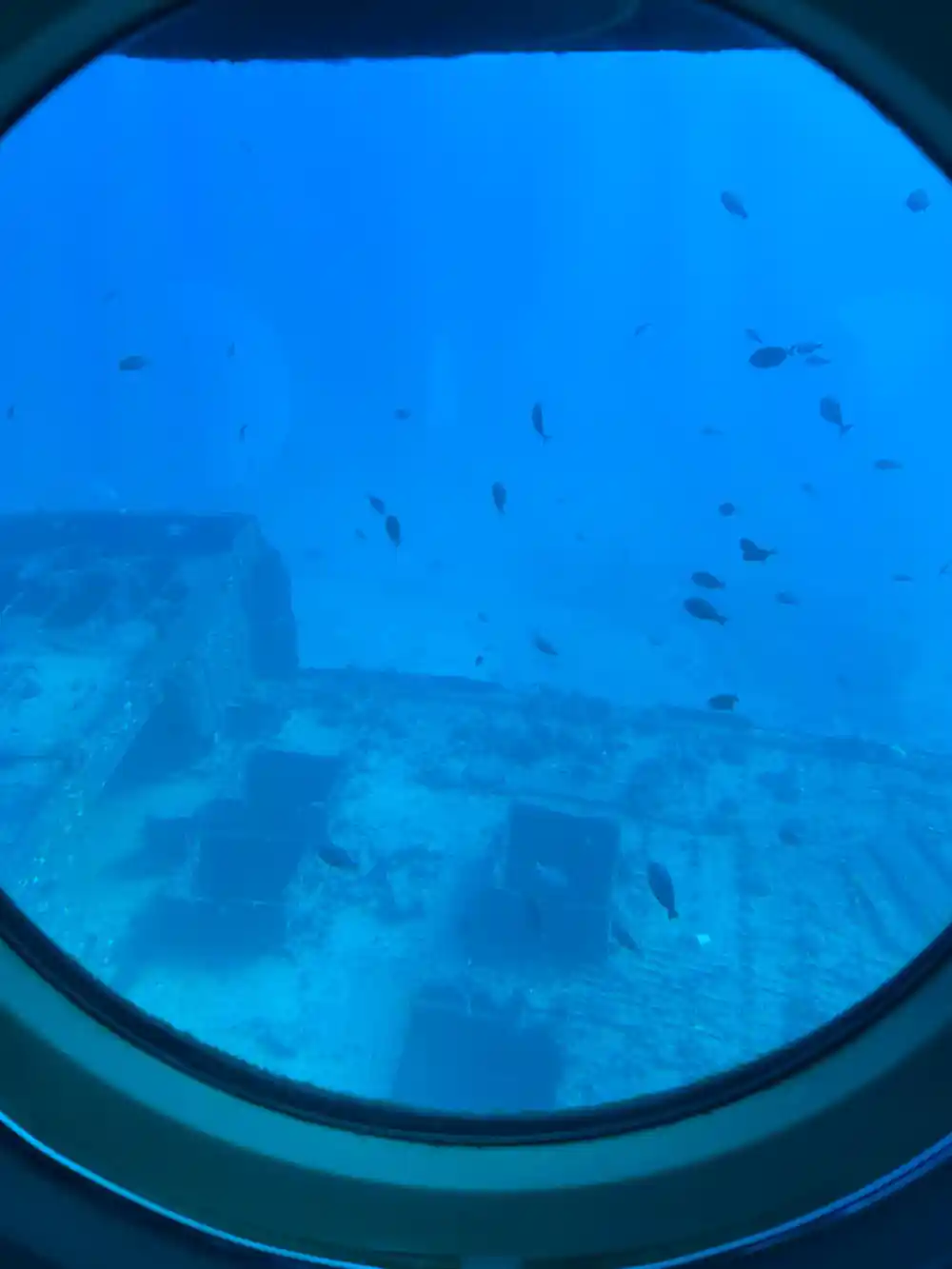
And you do not need to be comfortable in open water. A great many people who find the sea frightening do this happily, precisely because the water stays on the other side of the glass.
Pregnancy, claustrophobia and other individual questions
The operator publishes no pregnancy restriction for this trip, and this page will not invent one. What can be said factually is what is involved: a short boat crossing in open water, a vertical ladder in both directions, and an hour or so seated in an air-conditioned cabin at constant surface pressure with no toilet aboard.
That is the information a doctor would want, and a doctor is the right person to ask.
On claustrophobia, the honest position is that this cabin triggers it far less often than people expect, because every seat faces a large viewport onto open water and daylight. But it is a sealed vessel that cannot be left in the middle of a dive, and somebody with a serious diagnosed condition should weigh that rather than be talked out of it.
For anything else specific, ask at the time of booking. A short question in advance beats a difficult situation on a pier.
Why the list is so short
It is worth noticing what is absent from this page compared with almost every other water activity in Hawaii.
A snorkel trip asks about swimming ability. A dive asks for certification and a medical declaration. A kayak or a surf lesson asks about fitness. A parasail asks about weight. Almost every way of being on or in the sea here comes with a screening question, because almost every one of them puts you in the water.
This one does not. The water stays outside the hull, the air stays at surface pressure, and you sit in a chair. Once you are through the hatch there is nothing left to be capable of.
That is the reason the whole list of requirements reduces to a height and a ladder, and it is why this trip reaches an audience that no other underwater activity in the state can.
Measure the children, check the ladder
from US$168Reserve now & pay later