The quick version
- Two boat crossings and a check-in make up the rest.
- Before the advertised start, and it is not optional.
- And leaves the rest of the day genuinely intact.
- It runs all year; what moves a departure is the water.
The blocks
An hour and forty-five minutes is the advertised duration and it is worth breaking down, because the shape is not obvious and it affects how you plan around it.
Roughly: twenty minutes of check-in before the stated time, the crossing out to the submarine, the transfer aboard, the dive itself, the transfer back, and the crossing in.
The submarine portion is the middle third rather than the whole. That is not a criticism and it is not unusual for this kind of operation, but it does mean a straight comparison of advertised durations between operators is not comparing like with like.
The compensation is that everything in the total is doing something. The crossings are on open water with a view of Waikiki from the sea, which is a thing in its own right, and the check-in is where the group is organised and briefed.
Check-in, and why twenty minutes
The requirement is to check in twenty minutes before the scheduled tour time, and that period is fully used rather than being a buffer.
In it, the booking is confirmed, the group is counted, a briefing covers the transfer and the ladder, and sixty-odd people are moved onto a surface boat in an orderly way. Any of that going slowly delays a boat that has to meet a submarine.
It is also the last opportunity to raise anything: a child's height, a mobility question, seasickness, which side to sit on.
Arriving thirty minutes before rather than twenty buys a short wait in the sun on a Waikiki pier and removes the only genuine time pressure in the day.
The dive itself
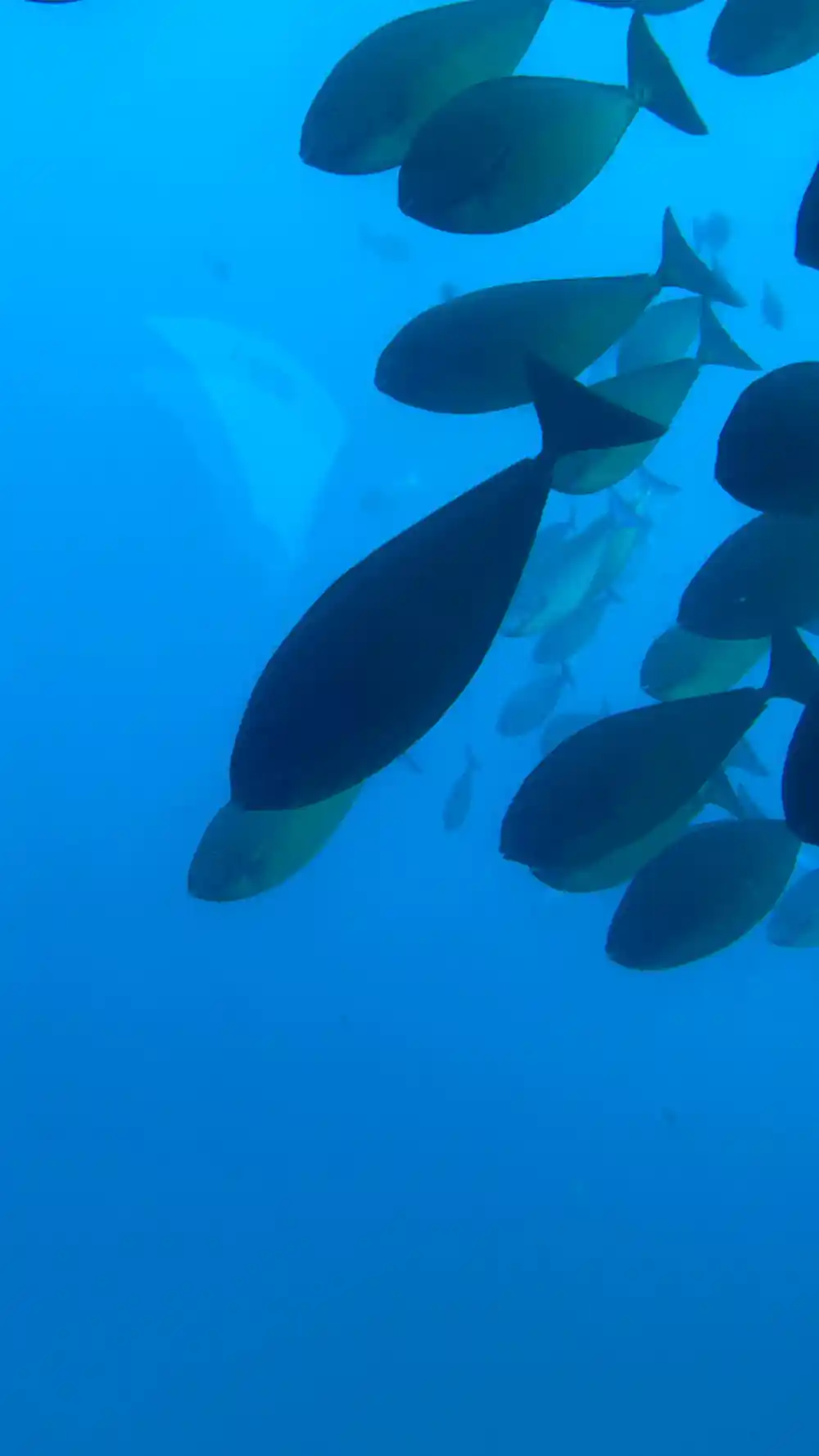
The submerged portion is the reason for everything else, and it is shorter than the total suggests and longer than it feels.
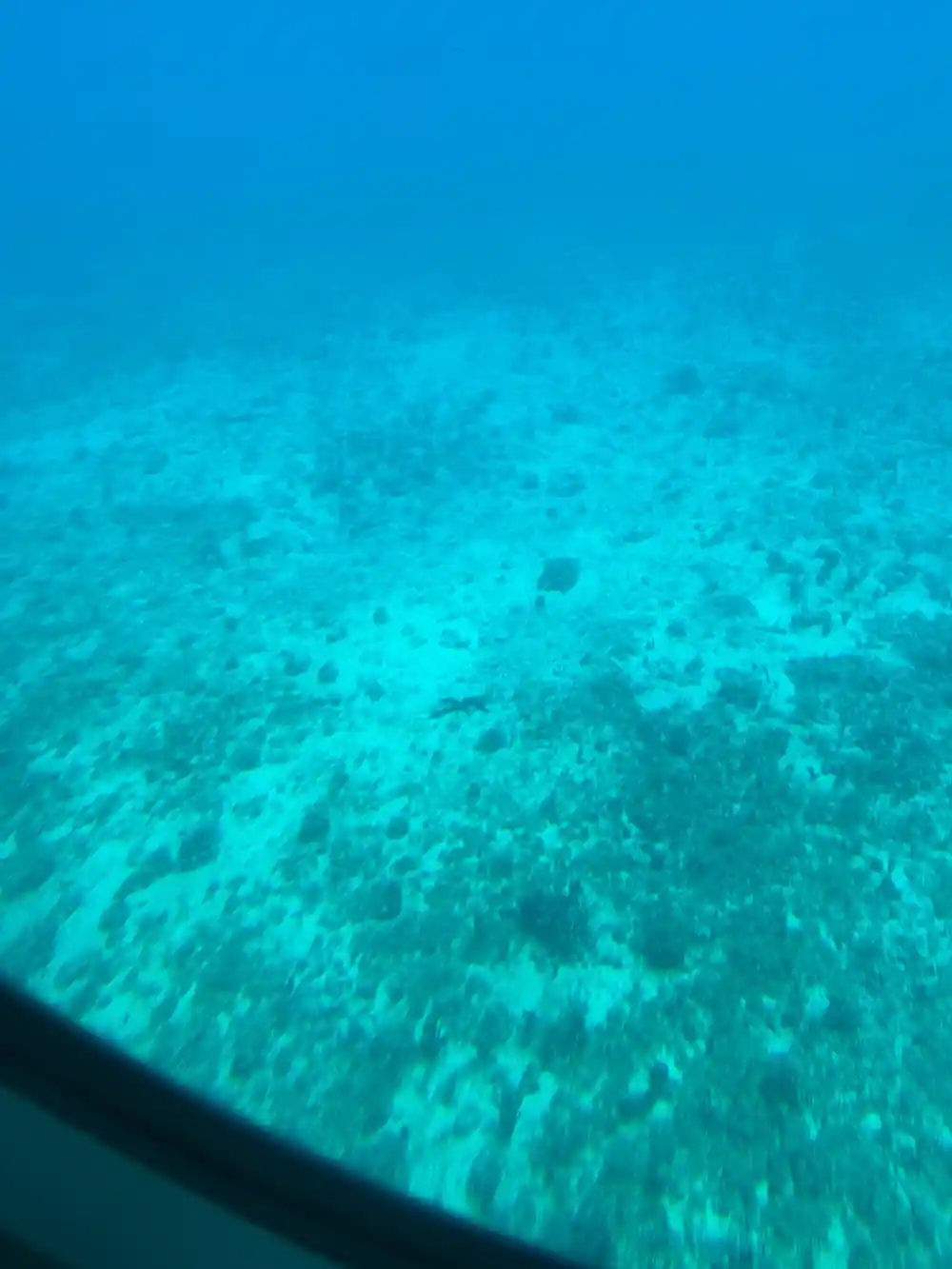
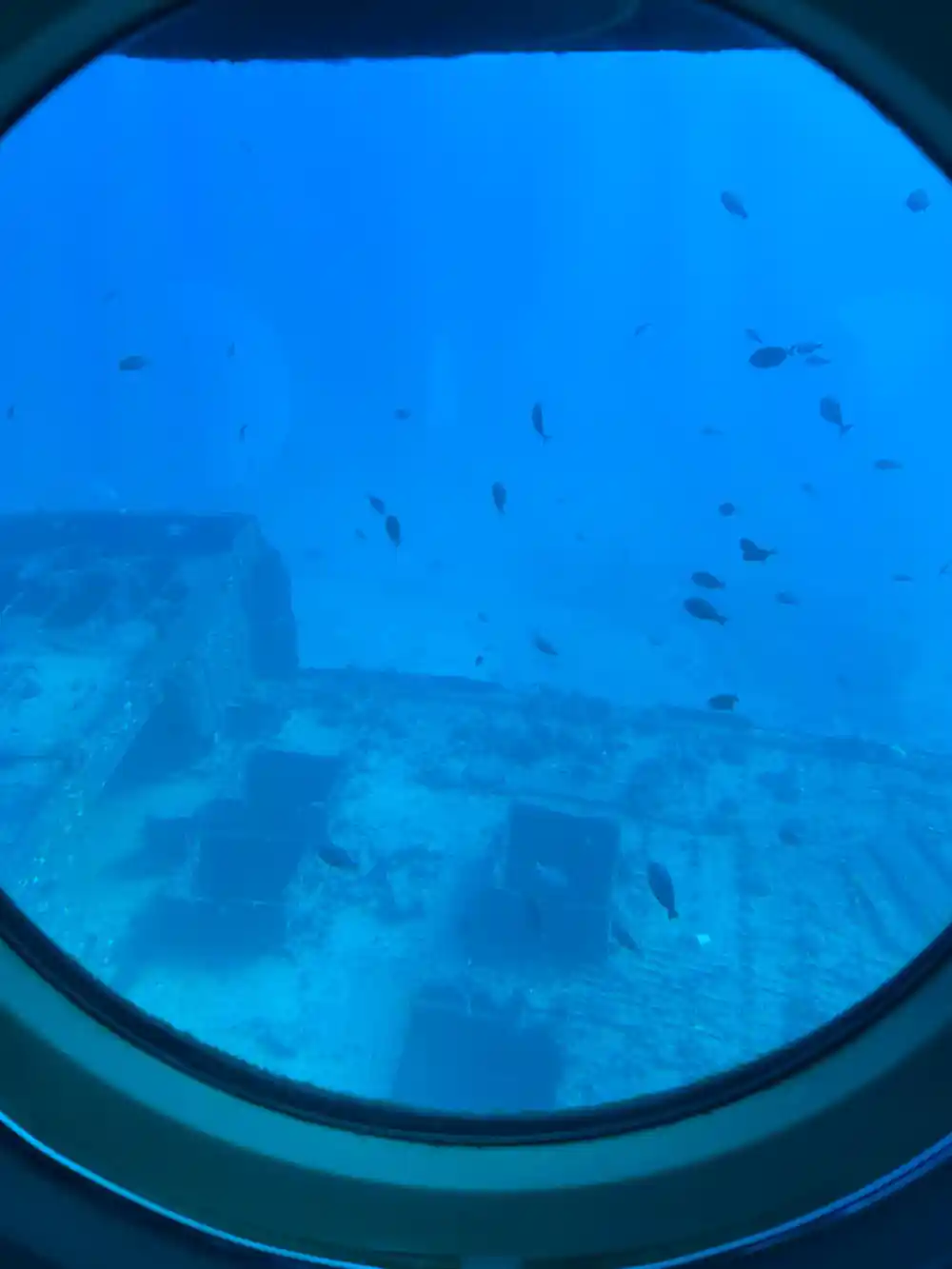
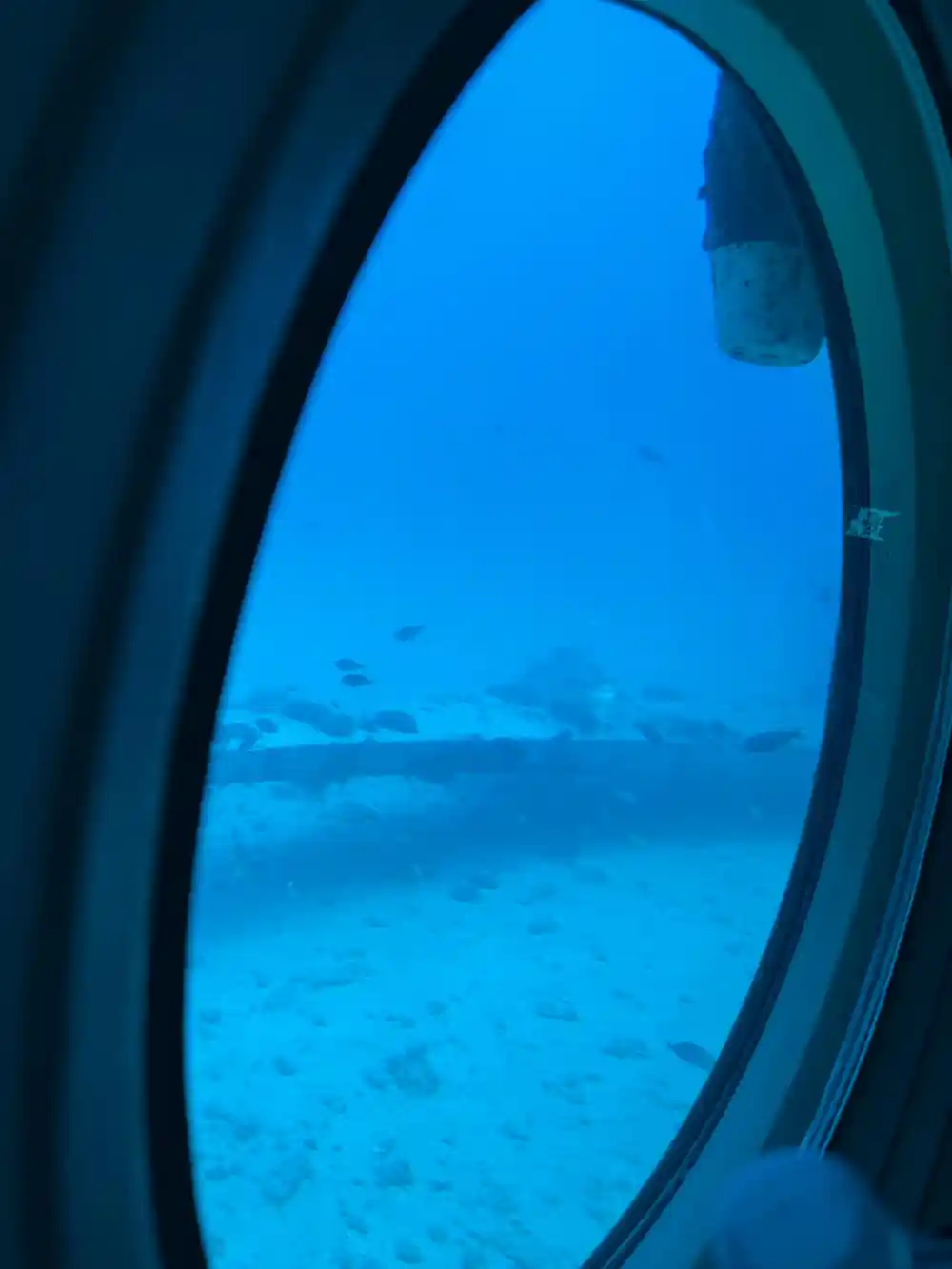
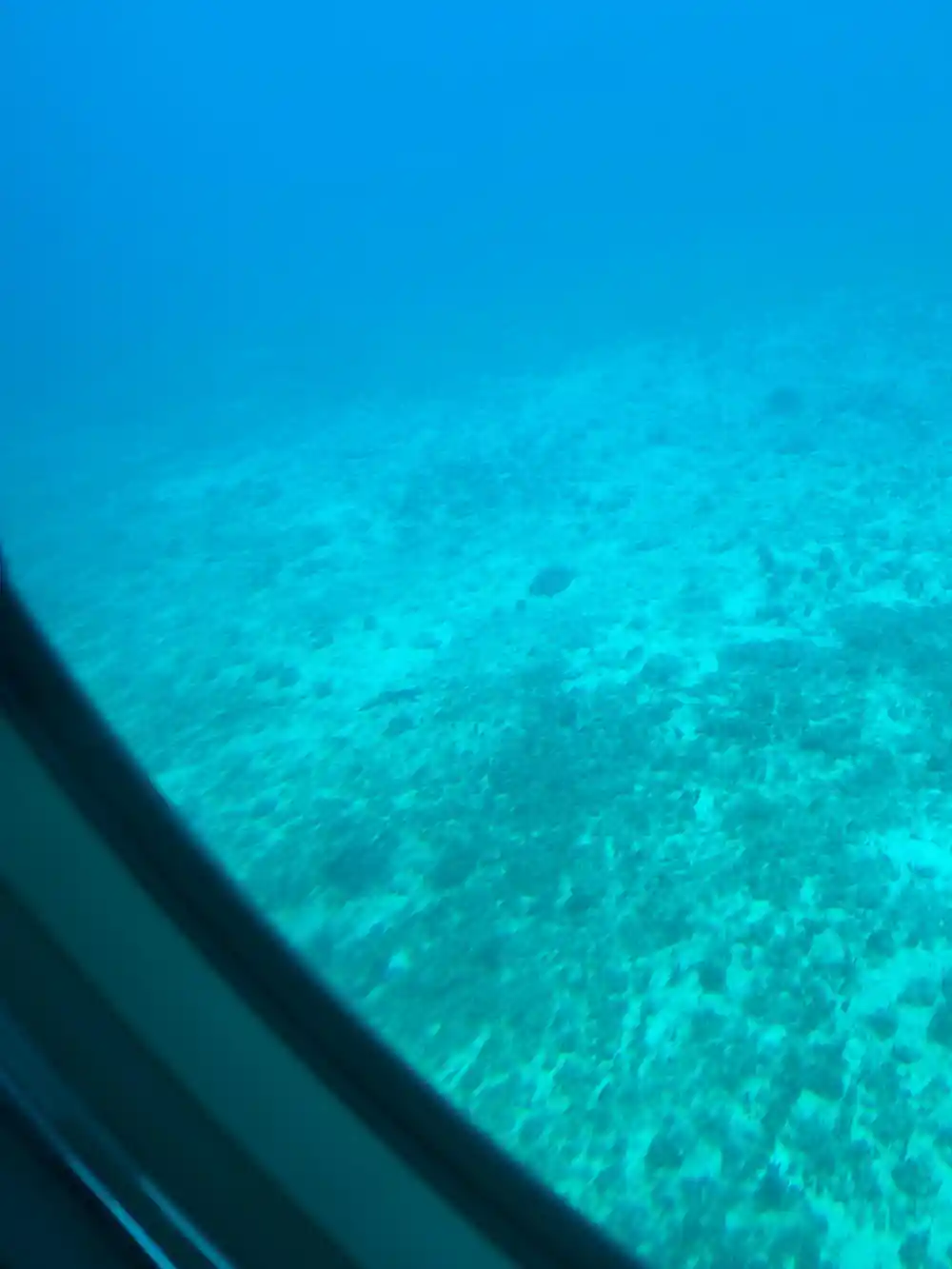
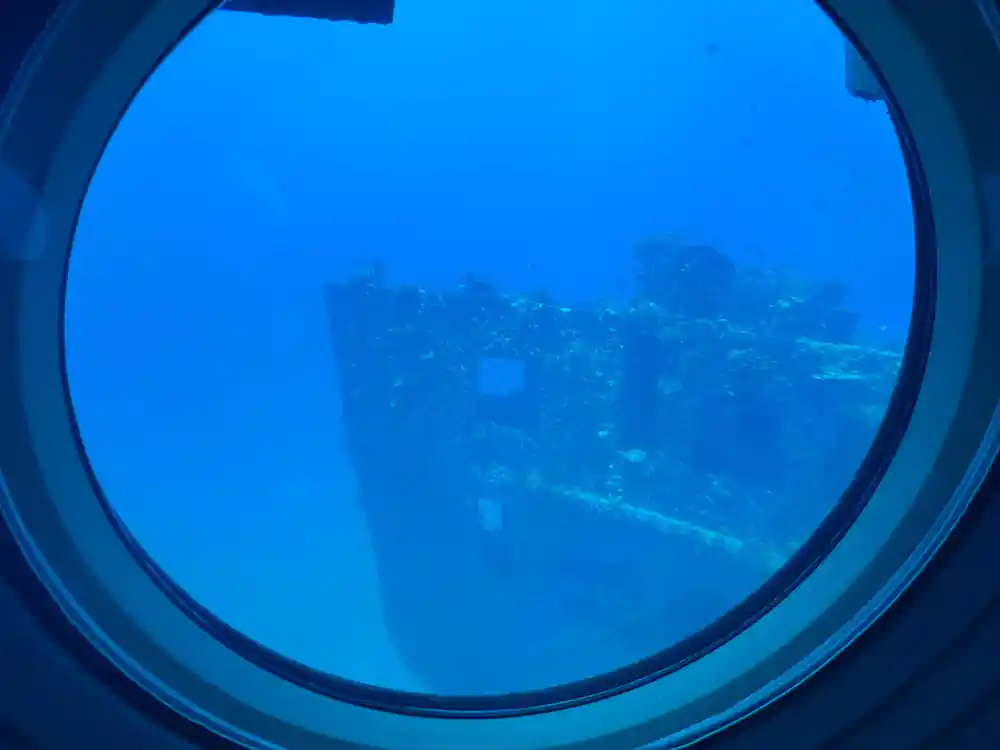
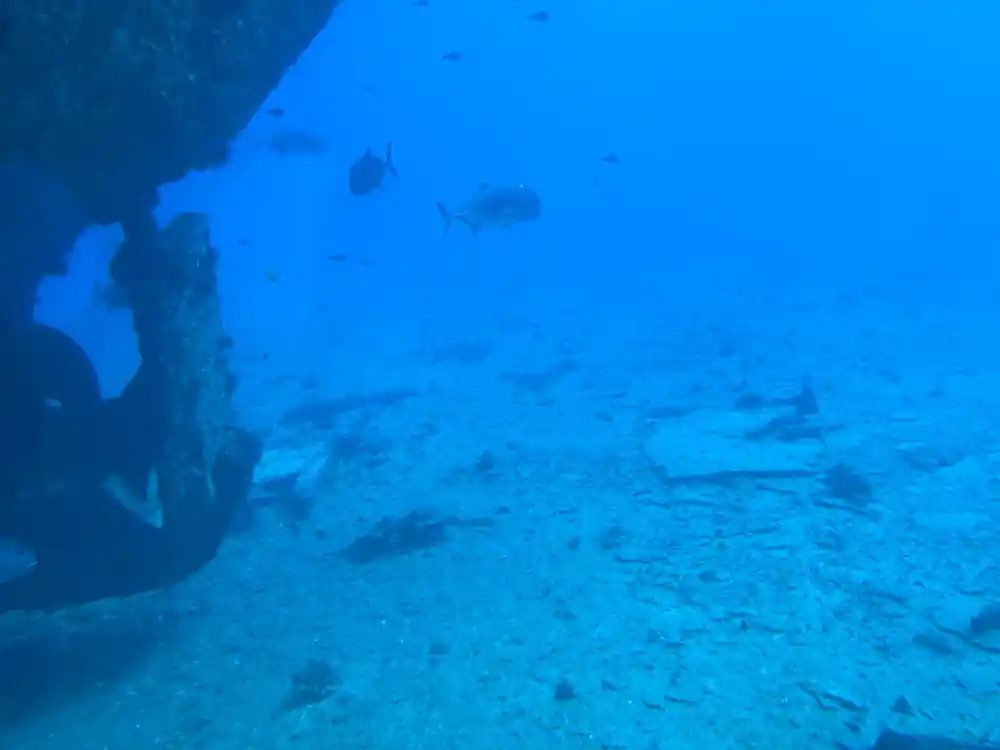
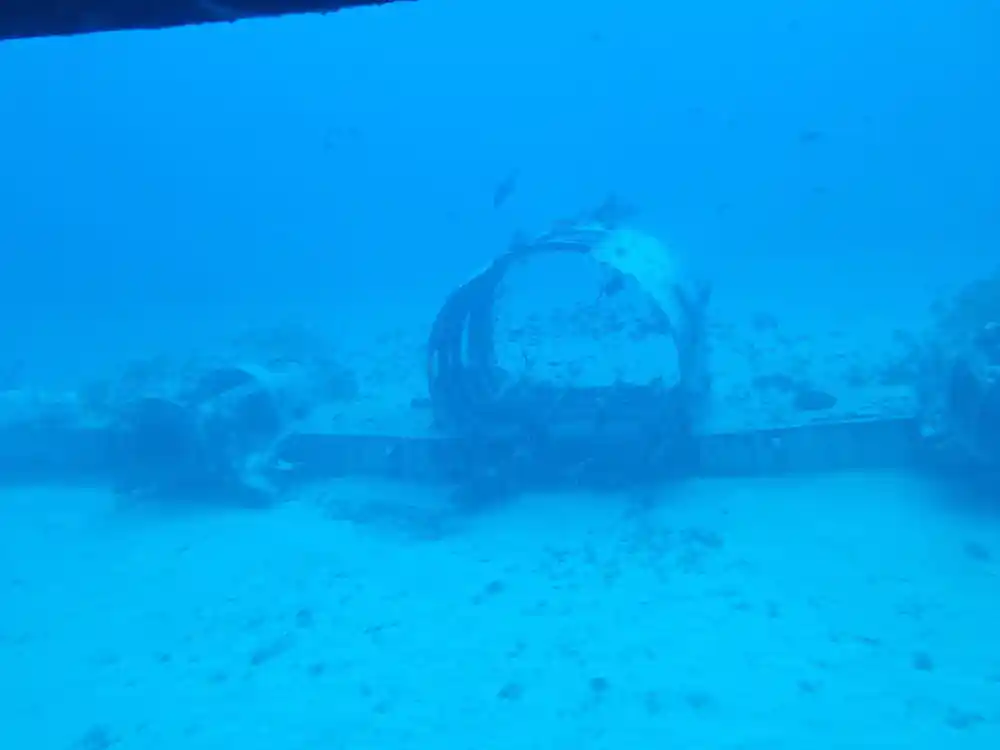
The submarine descends, works the dive site along a planned route between the structures, and returns. There is commentary throughout and the pace is deliberate, because a submarine has no reason to hurry past the only interesting things in the vicinity.
People consistently report that it passed faster than they expected, which is the usual sign of an experience working. The main regret is spending it photographing rather than looking, which is covered elsewhere on this site and is worth taking seriously.
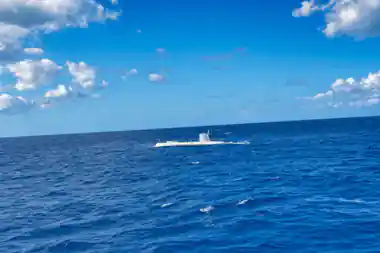
The submarine surfacing beside the transfer boat
Fitting it into a day
This is one of the more accommodating excursions in Hawaii from a planning point of view, and it is a genuine advantage over most of what is sold alongside it.
Under two hours door to door means a morning departure leaves the entire rest of the day intact. You can do this and then have a normal Waikiki afternoon: beach, lunch, anything.
It also sits geographically in the middle of things rather than at the end of a drive. The pier is in Waikiki itself, so nothing is lost to transit either side beyond walking across a resort.
The one caveat is not to book it tight against something else with a fixed time. The dependencies are a boat and a submarine, and while delays are not common they are possible.
Time of day
There are departures through the day and the differences between them are smaller than people expect, because the thing you are looking at is a hundred feet down.
Light does reach that depth, and more of it reaches when the sun is high, so a middle-of-the-day departure has marginally better conditions for seeing the structures clearly. Early and late departures have a lower sun and slightly less light penetrating.
Against that, an early departure gets you back with the whole day ahead, and the surface crossing is more pleasant before the day has heated up.
Sea state varies through the day with the wind, and in general mornings are calmer on this coast, which matters if anyone in your party is prone to seasickness. If there is a reason to choose, that is probably the strongest one.
Weather and cancellations
It runs all year. Hawaii does not have a season in which the submarine stops, and the water at a hundred feet is the same in February as in August.
What stops a departure is the surface: sea state severe enough to make transferring sixty-four people between two vessels unwise. That is a small number of days and it is judged on the morning.
Rain does not stop it, and is close to irrelevant given that most of the trip is either inside a boat or underneath the sea.
Free cancellation is offered on the booking, which for a trip this short and this central is mostly about your own flexibility rather than about the weather.
Comparing it with the alternatives
Two hours is short by the standards of what else is sold on this beach, and that is worth holding up against the alternatives when you are deciding how to spend a day.
A catamaran sail is typically two to three hours. A snorkel trip to a bay outside Waikiki is half a day once transfer time is counted. A north shore or circle-island tour is the whole of one. A dedicated whale-watching trip in season is a morning.
Against those, an outing that starts at a pier you can walk to and returns you to it inside two hours is unusually easy to fit around anything else you have planned.
That is a genuine argument for booking it early in a trip rather than saving it. It takes a morning rather than a day, and if the sea is unkind on the morning you chose there is room to try again.
Under two hours, and the afternoon is still yours
from US$168Reserve now & pay later
Questions people ask
How long is the whole thing?
How long are you underwater?
Why is check-in twenty minutes?
Can I do it in a morning?
Is one departure time better?
Does it run all year?
Does rain cancel it?
What does cancel it?
The timings
Check in, twenty minutes before
Confirmation, counting, briefing and boarding a boat. Fully used.
The crossing out
Open water off Waikiki with the city and Diamond Head behind you.
Transfer and down the ladder
Two vessels alongside, then seven steps through the hatch.
The dive
Descend, work the site along a planned route, commentary throughout.
Surface and transfer back
The same thing in reverse, and easier the second time.
Back at the pier
Same pier you left from, with most of the day still available.