The quick version
- It cannot come alongside a beach pier and does not try.
- Out to the dive site and back again afterwards.
- Sheltered, usually calm, and moving. It is not a canal.
- Which is where reasonable mobility matters as much as the ladder.
The part nobody expects
Ask somebody what they think a submarine tour involves and they will describe walking down a pier and getting into a submarine. That is not how this works and the difference shapes the whole outing.
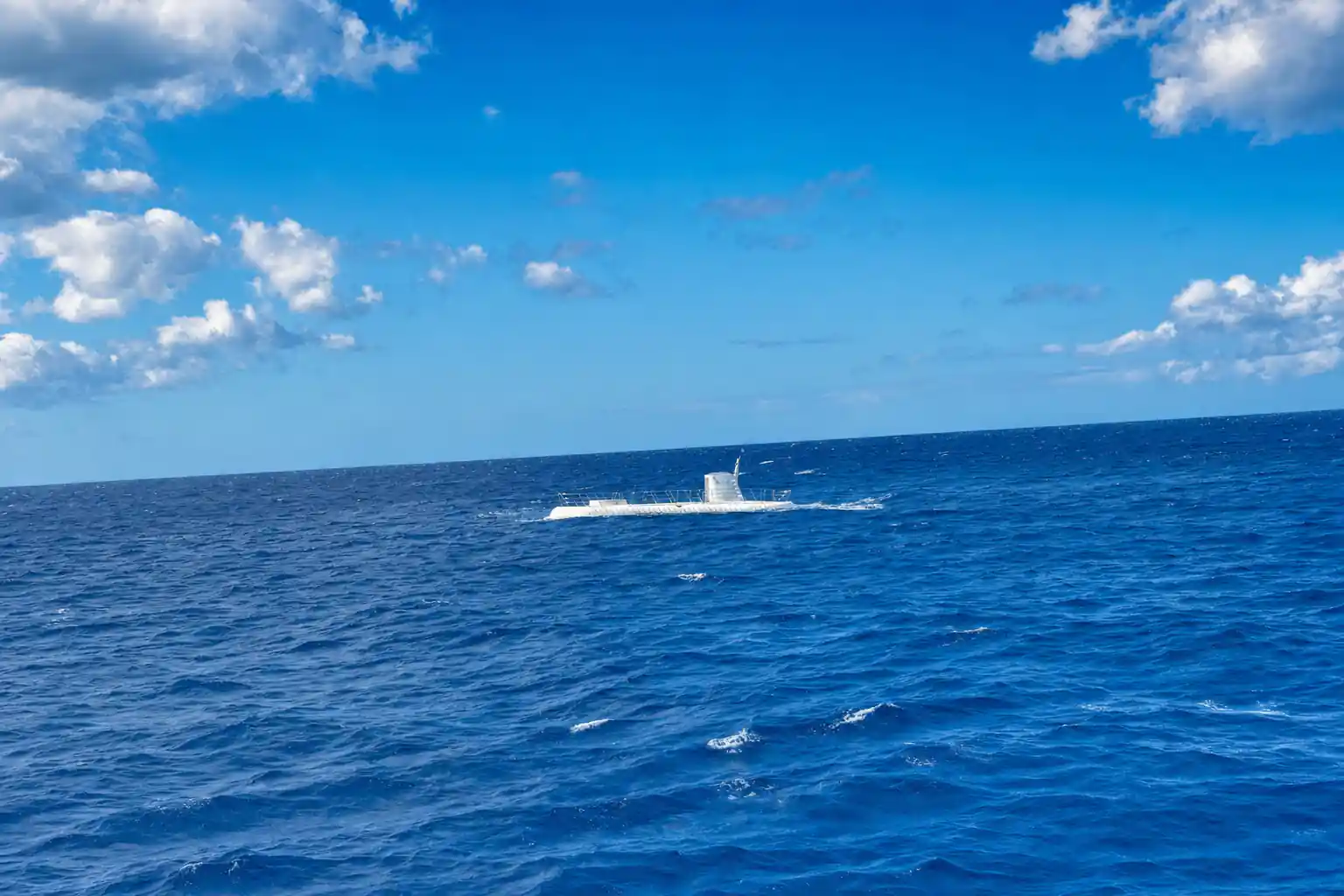
The submarine is moored out at the dive site. A surface vessel leaves the Hilton Pier with the passengers aboard, crosses to it, comes alongside, and transfers everybody across. At the end the same thing happens in reverse.
So there are three vessels' worth of experience in this booking: the boat out, the submarine, and the boat back. Understanding that in advance explains the twenty-minute check-in, the duration, and why comfortable shoes appear on the list.
Why the submarine stays out there
Because it cannot do anything else, for two straightforward reasons.
A vessel built to operate at a hundred feet is heavy and deep-drafted. It needs water beneath it that a beach pier in Waikiki simply does not have, and manoeuvring something of that mass in a shallow, busy, swimmer-filled inshore area would be both difficult and unwise.
The second reason is time. Every minute the submarine spends transiting to and from a pier is a minute it is not diving, and the economics of a vessel that carries sixty-four people at a time depend on it being at the dive site rather than commuting. Keeping it offshore and moving the passengers instead is simply the efficient arrangement.
The same pattern is used by passenger submarines everywhere. It is standard rather than a local compromise.
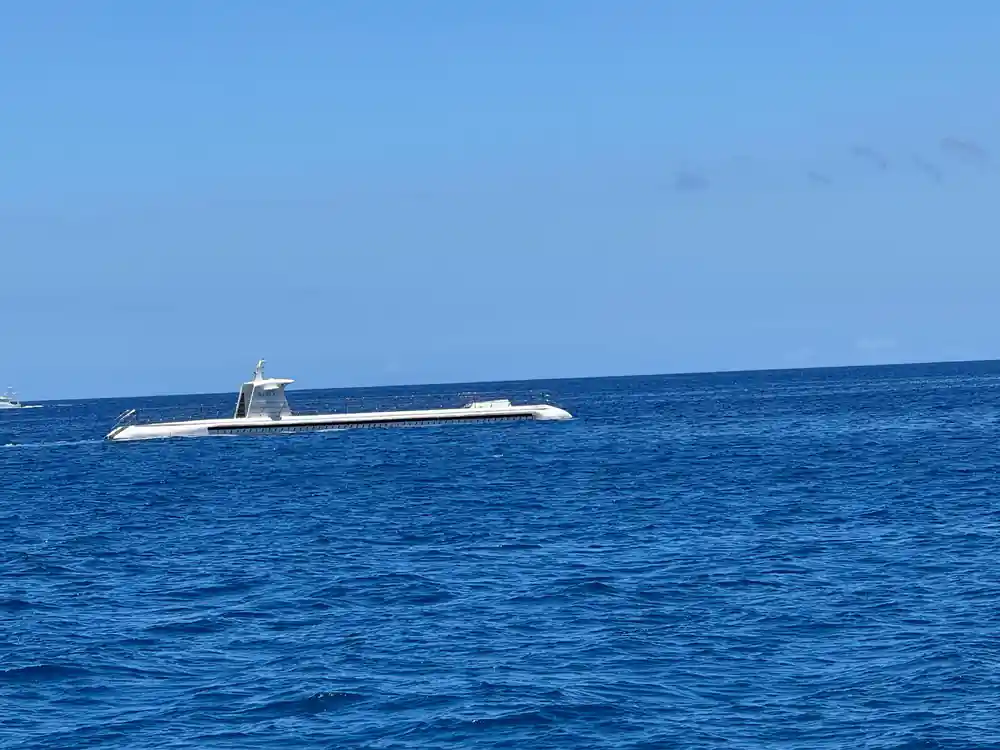
The transfer boat alongside the surfaced submarine
The crossing
Short, and pleasant on a normal day. You are on the water off Waikiki with the beach, the hotel strip and Diamond Head behind you, which is a view of Honolulu that most visitors never get.
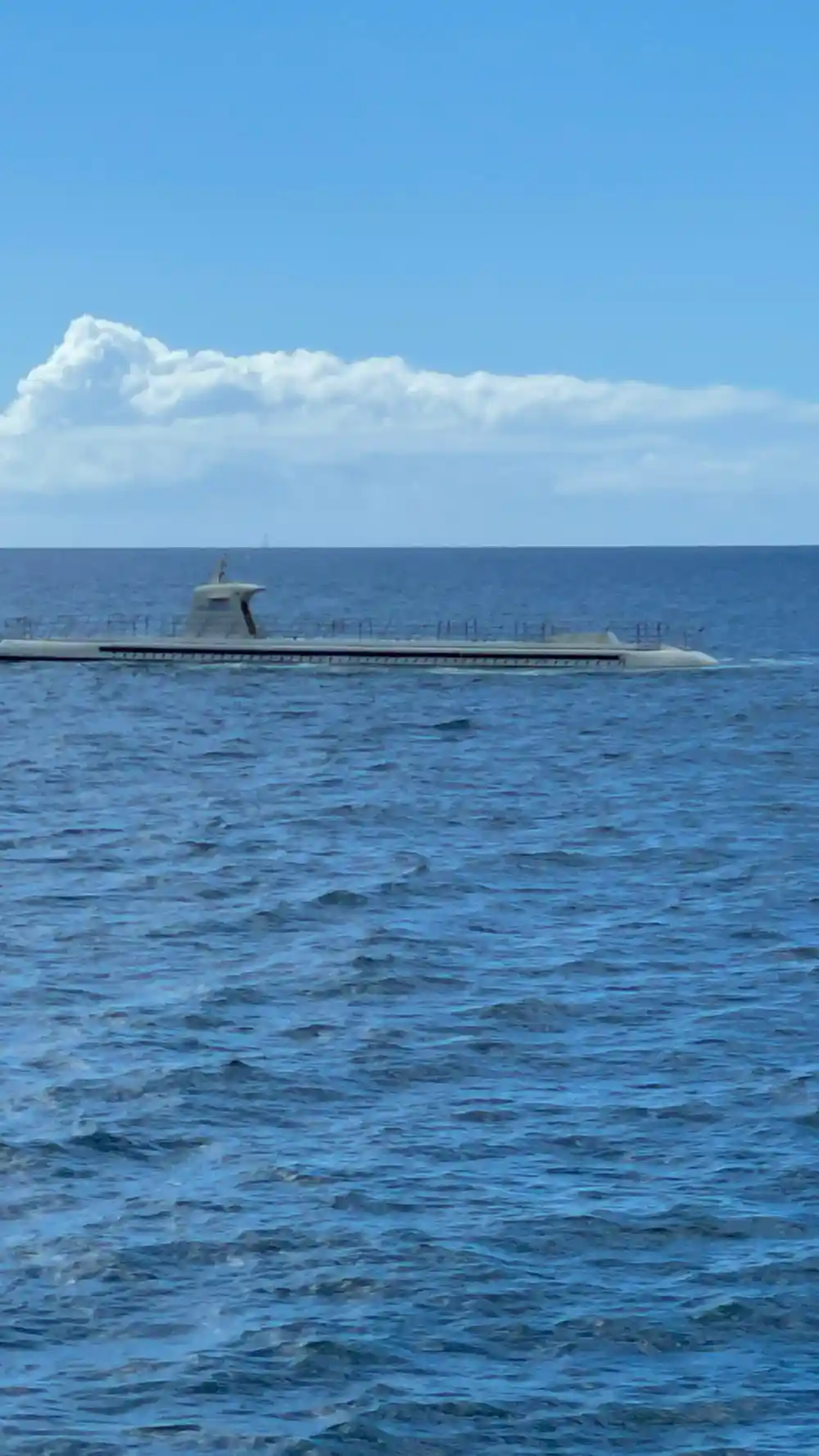
It is worth being on deck rather than under cover for it. This is the only fresh air in the trip, the light is good, and the approach to a surfaced submarine is a genuinely striking thing to watch: a long white hull sitting low in the water with a fin amidships and nothing else about it that looks like a boat.
The water off this coast is sheltered by the island and is usually calm. It is still open sea, and it moves in a way that a harbour does not.
The crossing is also where you get your bearings for what follows, since you can see exactly where you are relative to the shore before you go under it.
The transfer between vessels
The two boats come alongside and you step across. It is supervised, it is quick, and on a normal day the movement between them is small.
It is nonetheless a step between two things that are both moving independently, on water, and it is the second reason the operator asks for comfortable shoes. Hands should be free, and anything you are carrying should be on your back or in a pocket.
Crew manage the timing and will tell you when to move. The correct approach is to do what you are told promptly rather than to hesitate on the gunwale, because the moment they have chosen is the one where the two decks are aligned.
For most people it is a non-event. For anybody with balance difficulties it is worth thinking about alongside the ladder.
Two boats
The submarine is too deep-drafted for a beach pier and too valuable to spend its day commuting, so a surface vessel carries the passengers out to it.
Seasickness
This deserves proper treatment because the trip's shape makes it a real consideration for a minority of passengers.
The submarine itself is the least sick-making vessel imaginable. Below the surface there is no wave motion at all, and a submerged hull is extraordinarily stable. People who are prone to seasickness are frequently astonished at how still it is down there.
The surface boat is a boat. It is a short crossing in sheltered water, and it will move.
The practical advice is the usual advice and it works. If you are reliably seasick, take whatever you normally take, and take it well before you arrive rather than on the water where it is too late to be absorbed. Sit outside on the crossing, look at the horizon, and avoid going below on the surface boat.
And know that the worst of it is over once you are down the ladder. Whatever the surface is doing, a hundred feet below it is doing nothing at all.
What you see on the way
The city from the water, which is the best angle on Waikiki available. The hotel strip is a wall of towers along a beach with green mountains behind it and cloud usually sitting on them, and Diamond Head anchors the eastern end of the view.
The submarine itself as you approach, surfaced and waiting, which is the first proper sense of the scale of the thing.
And occasionally something in the water on the way. This is open ocean off a tropical island and turtles, flying fish and seabirds all turn up. In winter, humpback whales are in Hawaiian waters and are sometimes visible from the surface, which is a bonus rather than a feature and is worth watching for.
None of that is the reason you booked, and all of it is free.
Out by boat, down by ladder, back the same way
from US$168Reserve now & pay later