The quick version
- Sixteen more than the 48-seat submarines, and the operator leads with it.
- Not a semi-submersible with a glass bottom. It descends under its own power.
- Cabin pressure never changes, whatever depth the hull is at.
- A pilot at a bow station with a large forward dome.
What kind of vessel it is
There are three quite different things sold to tourists under words like submarine, and it is worth knowing which one you have booked.
The first is a glass-bottomed boat: a surface vessel with a window in the floor. You stay on the surface and look down through a few metres of water.
The second is a semi-submersible: a hull that sits low with a viewing gallery below the waterline. Passengers are underwater, the vessel is not, and it cannot descend.
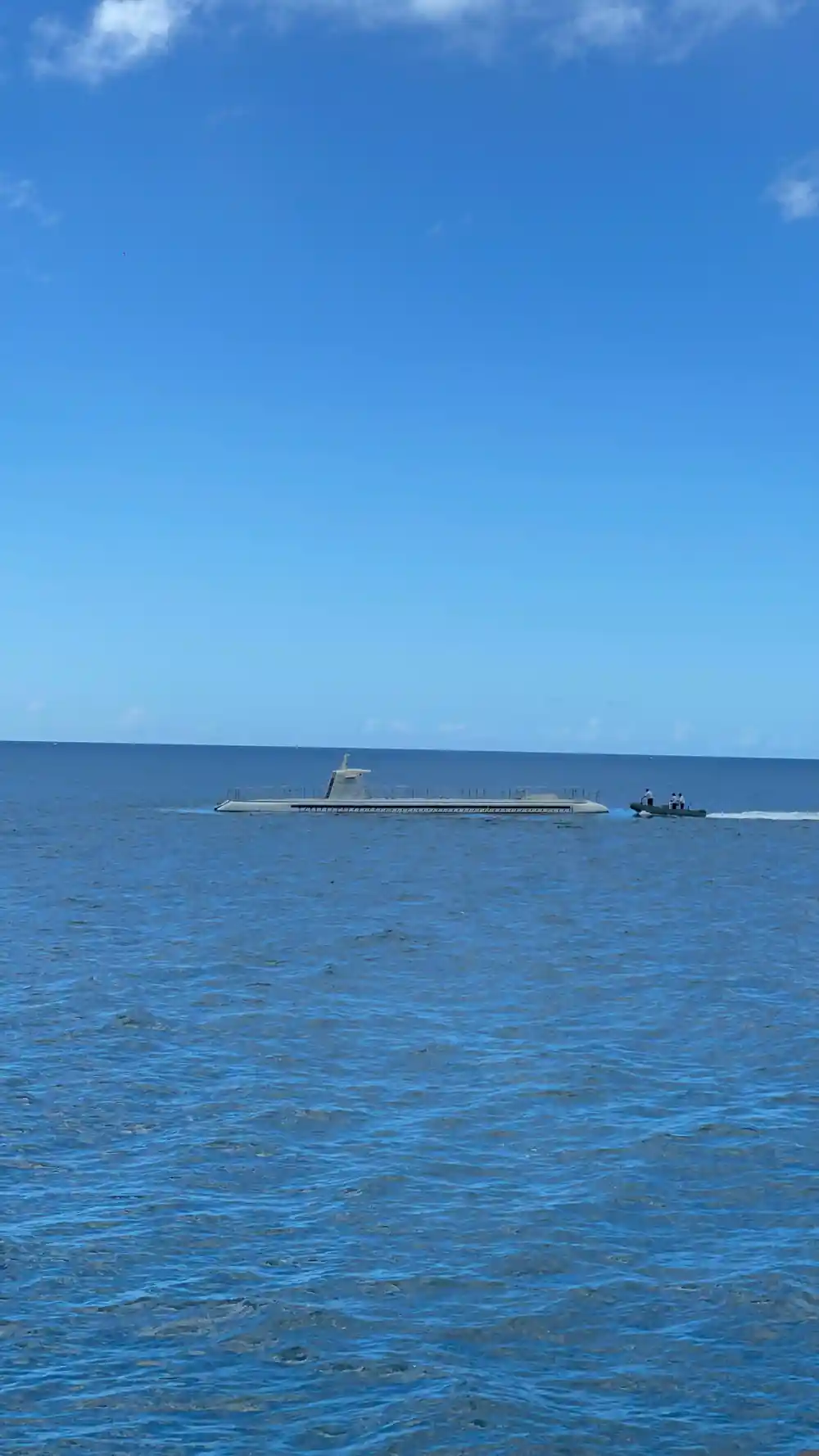
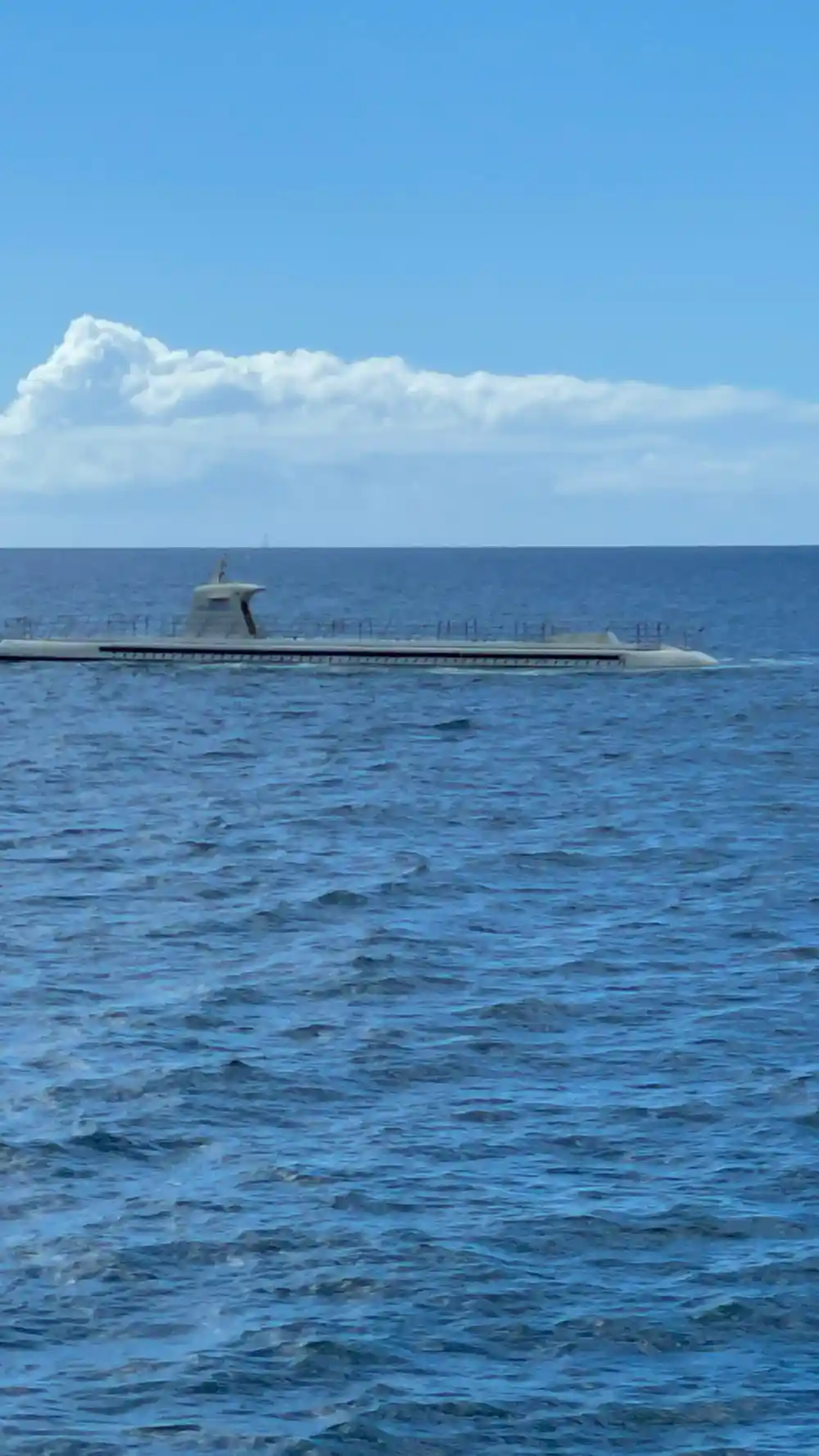
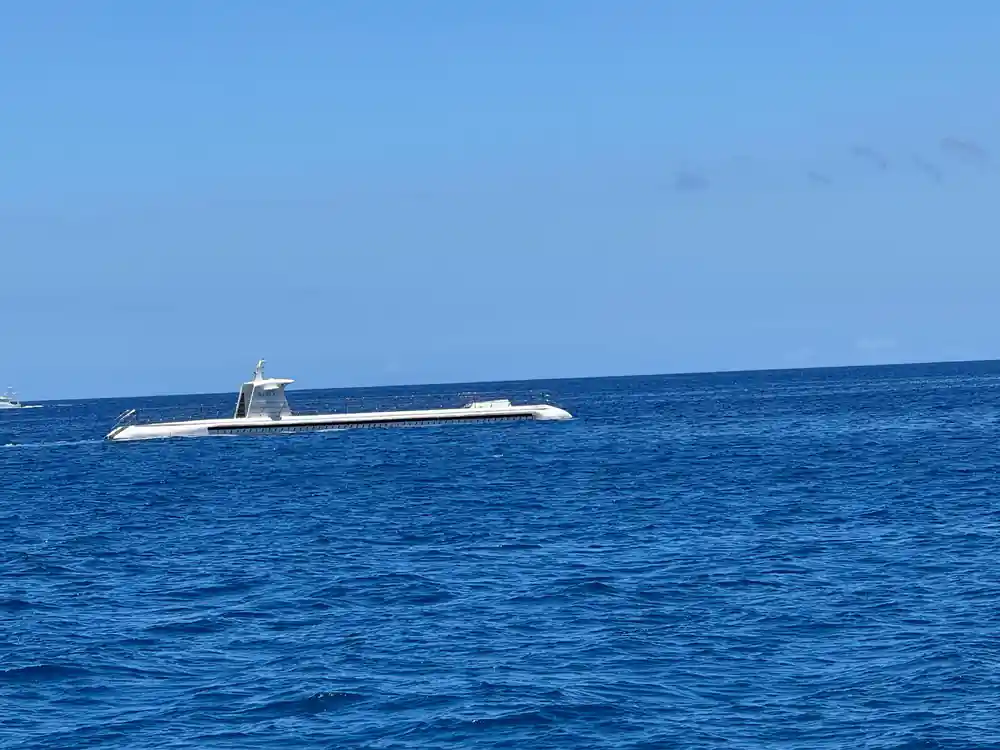
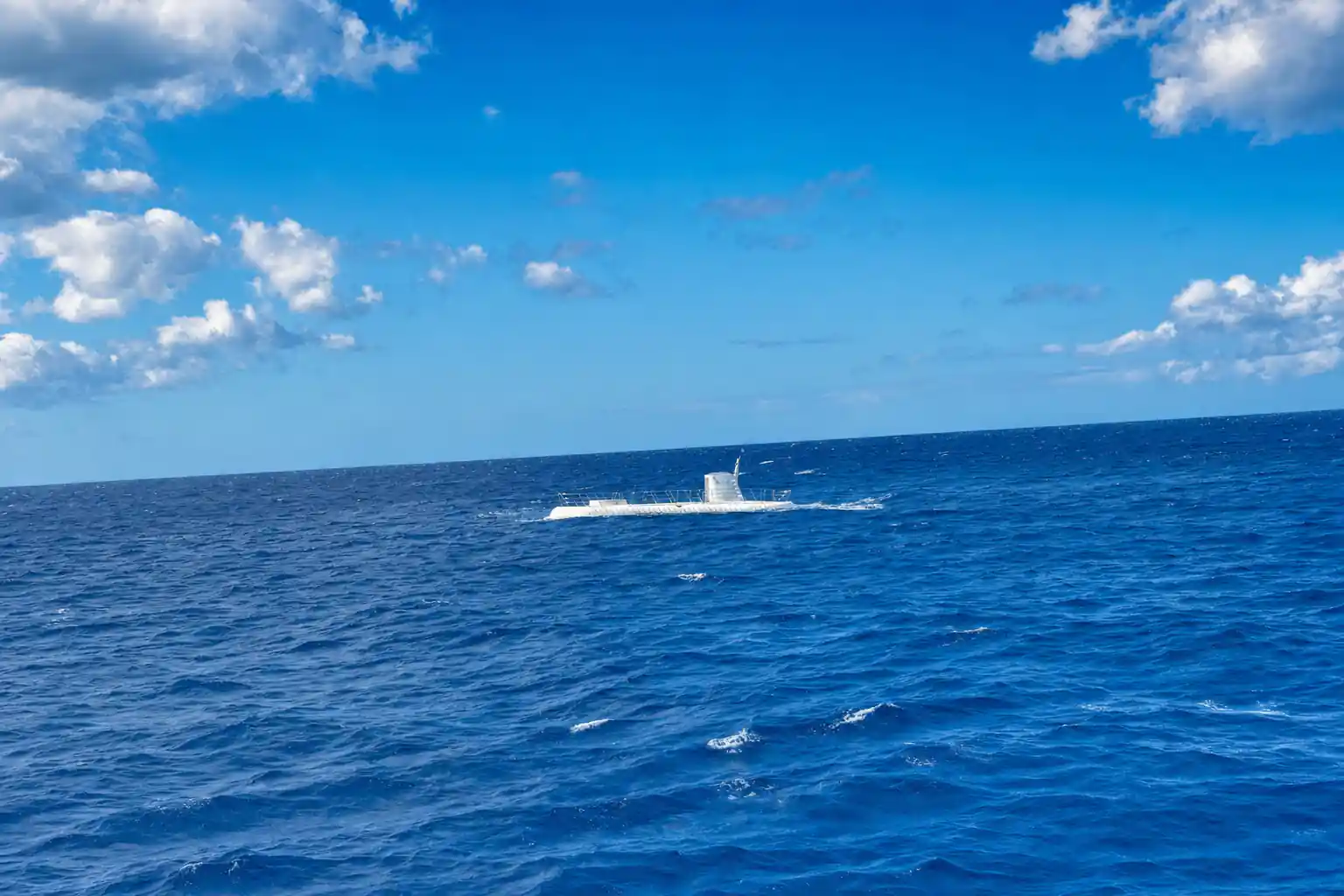
The third is an actual submarine, which floods ballast tanks, descends under its own power to a working depth, manoeuvres there, and blows ballast to return. That is what Atlantis XIV is. The distinction is not pedantry: it is the difference between looking through the top few metres of the sea and being at the bottom of a hundred feet of it.
Why sixty-four seats matter
The operator puts the number in the first sentence of the description, ahead of the reef, the turtles and everything else. That looks like corporate boasting and it is actually the most useful fact on the page.
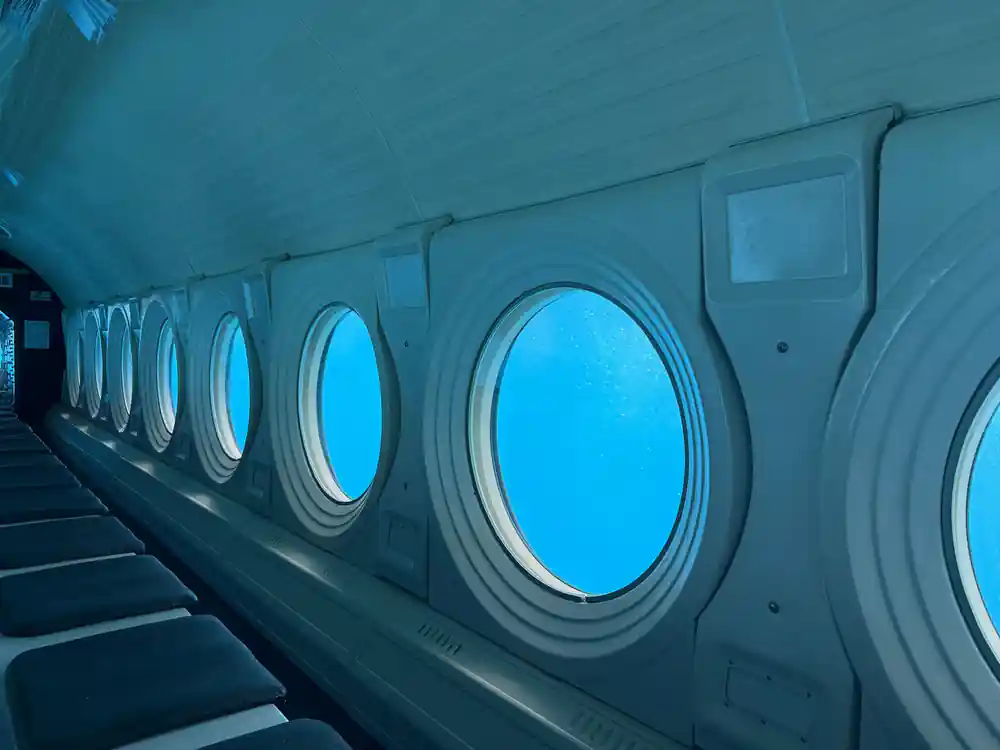
A passenger submarine is essentially a pressure tube with windows cut in it, and the number of windows is a function of the length. Add sixteen seats and you have added hull, and with the hull come more viewports.
The consequence is that a full boat does not mean a crowded one. Everybody has a viewport of their own rather than sharing, and there is more space between people than the seat count suggests. On smaller submarines a busy departure can mean taking turns at a window, which is a materially worse afternoon.
It also means fewer departures are needed to move the same number of people, which is why a booking is easier to get here than the capacity ceiling might imply.
The pilot at the forward dome, working the controls
How it dives
The mechanism is the same as any submarine and it is worth understanding because you can feel some of it happening.
Ballast tanks between the pressure hull and the outer casing are flooded with sea water, which increases the vessel's weight until it is slightly negatively buoyant and it begins to sink. Control surfaces and thrusters manage the attitude and the rate. At working depth the boat is trimmed to close to neutral so that it hangs rather than falls, and moves horizontally under its own propulsion.
To surface, compressed air is blown into the tanks, forcing the water out, and the vessel rises.
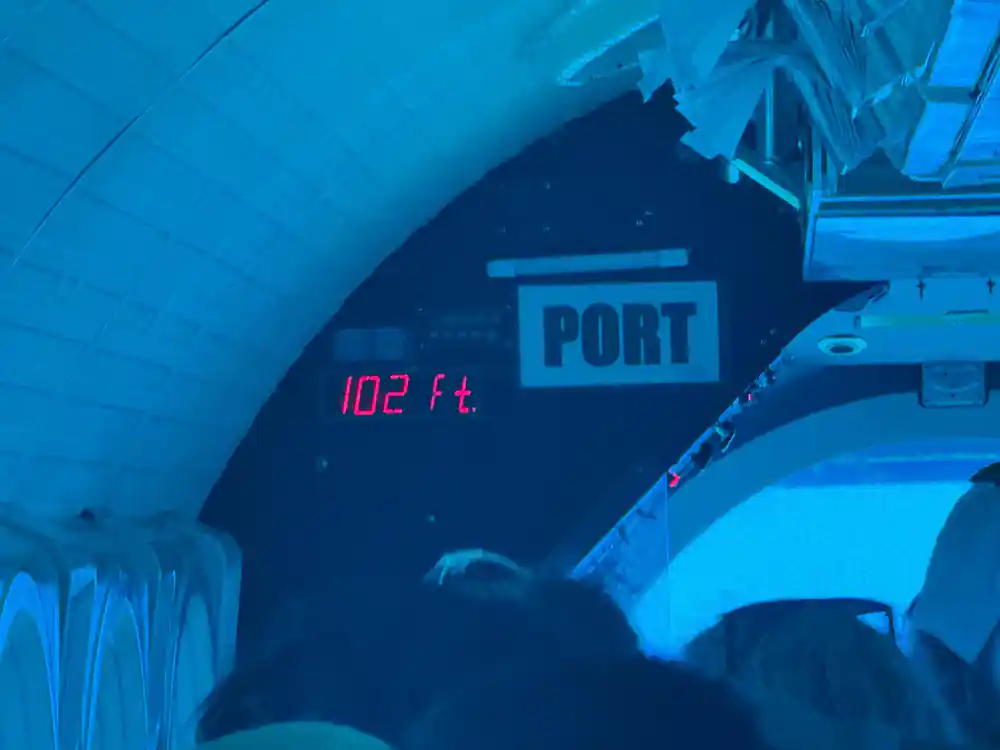
From inside, the descent is gentle and almost entirely visual: the light dims a little, the blue deepens, and a display counts off the depth. There is no sensation of falling and, because the cabin is at surface pressure throughout, nothing happens to your ears at any point.
The pilot and the crew
There is a pilot, seated at a station in the bow behind a large hemispherical viewport that gives a forward view the passengers do not get. If you like machinery, sit as far forward as you can: you can watch the whole business of flying the boat.
A commentator narrates the dive throughout, identifying structures and animals as they appear. This is included, and it is the difference between a blue blur and a place: the wrecks have histories, the fish have names, and somebody who does this every day knows where things usually are.
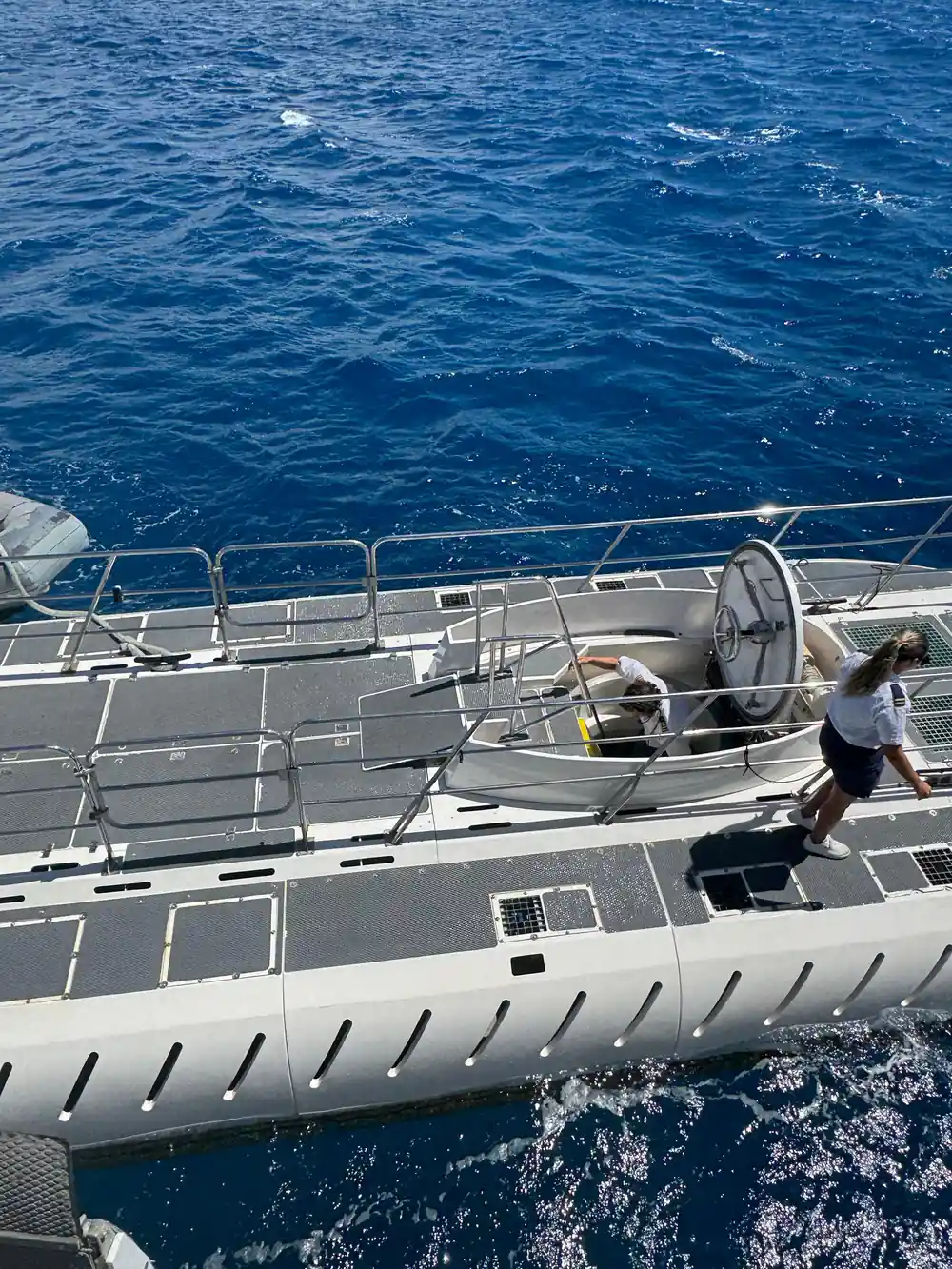
There is crew on the surface boat as well, and the transfer between vessels is managed rather than improvised.
One detail worth appreciating: this is a commercial vessel operating under safety regulation appropriate to carrying paying passengers below the surface, which is an unusual and heavily supervised category. The boat is inspected, the pilots are licensed and the operation has been running for decades.
64
Passengers aboard, against 48 on the smaller submarines. More seats means more hull, and more hull means a viewport each rather than taking turns.
What it is like to be in
Wider than the tube you are picturing. A hull built to carry sixty-four people in rows facing outward has to be reasonably capacious, and the impression on climbing down is of a long, bright, air-conditioned room rather than a machine.
Seating is back to back along the centre line, everyone facing a viewport. Nobody is in a middle seat and nobody is looking at an interior wall, which is the single most important fact about how the cabin feels.
It is cold. Air conditioning at that scale is not optional in Hawaii and the operator names a jacket in its list of things to bring, which is not a throwaway.
And it is quiet compared with expectation. There is machinery noise, and it is a low background rather than anything intrusive, which leaves the commentary and the general noise of sixty-four people enjoying themselves as the main soundtrack.
Where to sit
Seating is not assigned in any meaningful way and there is a real decision to be made in the twenty seconds after you reach the bottom of the ladder.
Forward is the machinery seat. The further towards the bow you are, the more you can see of the pilot working, the instruments and the forward dome, which for anybody interested in how the thing operates is worth more than a marginally better view of a wreck.
The two sides are not equivalent on a given day. The submarine passes structures on one side or the other depending on the route it flies, and passengers regularly report that one side had a better dive. Nobody can tell you in advance which, and the boat turns during the dive, so the disparity evens out somewhat but not completely.
The most useful thing you can do is ask a crew member on the surface boat which side they would sit on today. They know the planned route and they will tell you.
A real submarine, sixty-four seats, one window each
from US$168Reserve now & pay later