The quick version
- Everyone faces outward. Nobody has an interior seat.
- Two rows facing opposite walls, which is why nobody blocks anybody.
- Strong air conditioning, and you sit still in it for an hour.
- Included, and it is the difference between blue water and a place.
The first impression
You come down the ladder expecting a tube and arrive in a room. That is the reliable reaction and it is worth knowing in advance, because the mental image most people carry into this trip is a military submarine: cramped, dark, full of pipes and people edging past each other.
This is nothing like that. It is a long, bright, white cabin, air-conditioned, with a line of large round viewports down each side and a clear aisle along the middle. It is taller than you expect and considerably wider.
The atmosphere is closer to a small aircraft than to anything nautical, except that an aircraft does not have a window a foot across at every seat.
How the seating works
This is the single cleverest piece of design in the vessel and it explains why sixty-four people do not feel like a crowd.
Seats run back to back along the centre line of the hull in two rows facing opposite directions, so one row faces the port side and the other faces starboard. Everybody is looking outward at a viewport directly in front of them.
The consequences are worth spelling out. Nobody is in an inside seat with a view of somebody's shoulder. Nobody has to lean across a neighbour. Nobody is looking at a wall. And because you are facing away from the aisle, the boat feels considerably emptier than the seat count implies.
It also means that on any given dive the two sides see different things, since the submarine passes structures on one side or the other. The boat turns during the dive so it evens out somewhat, and the crew on the surface boat generally know which side is favoured by today's route if you ask.
The viewports
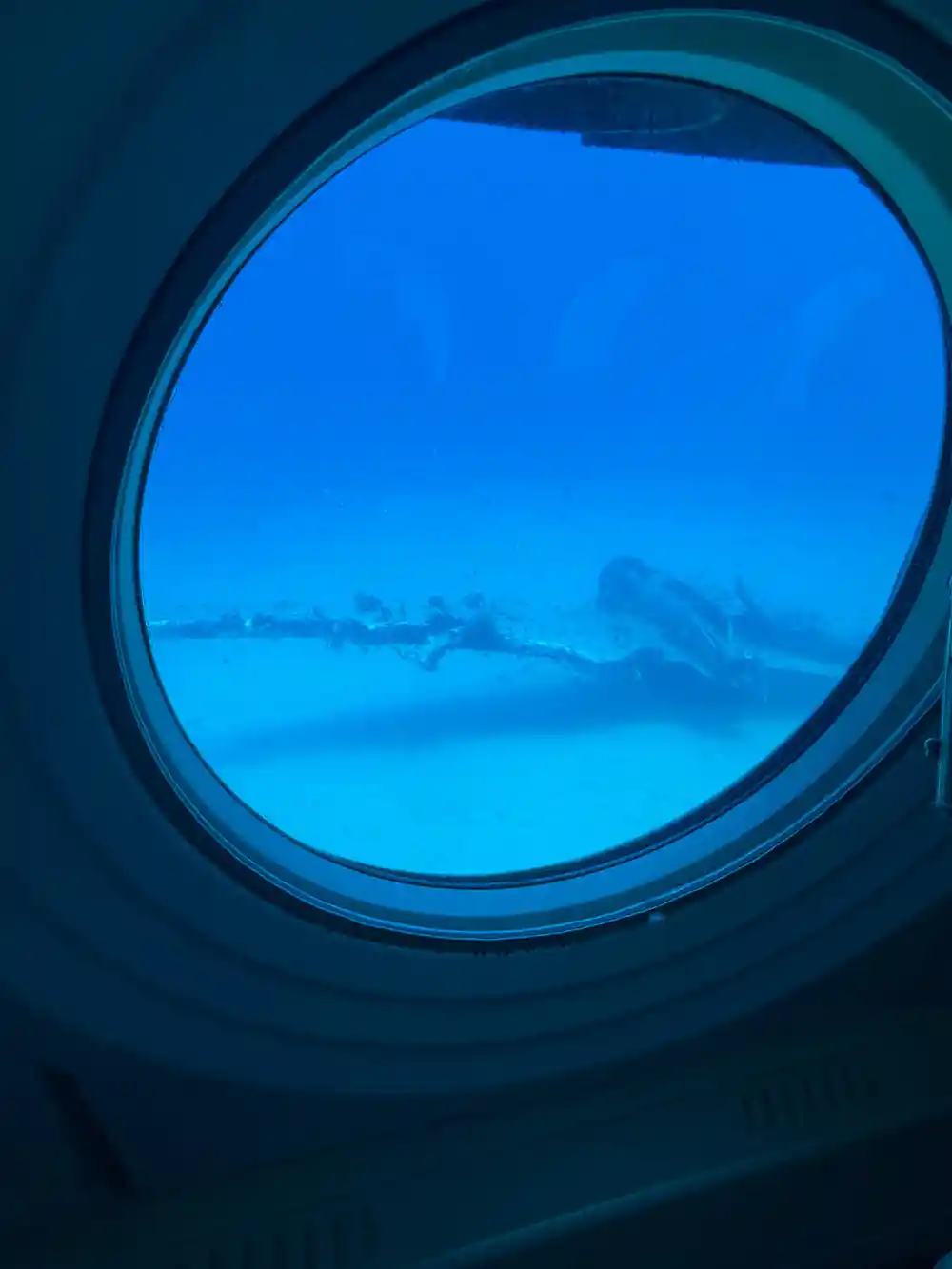
They are large, round, thick and curved, and they are the entire reason the cabin works.
Thickness is not decorative. At a hundred feet the water outside is at four atmospheres and the cabin is at one, and every viewport carries that difference across its whole area. They are engineered objects and they look it.
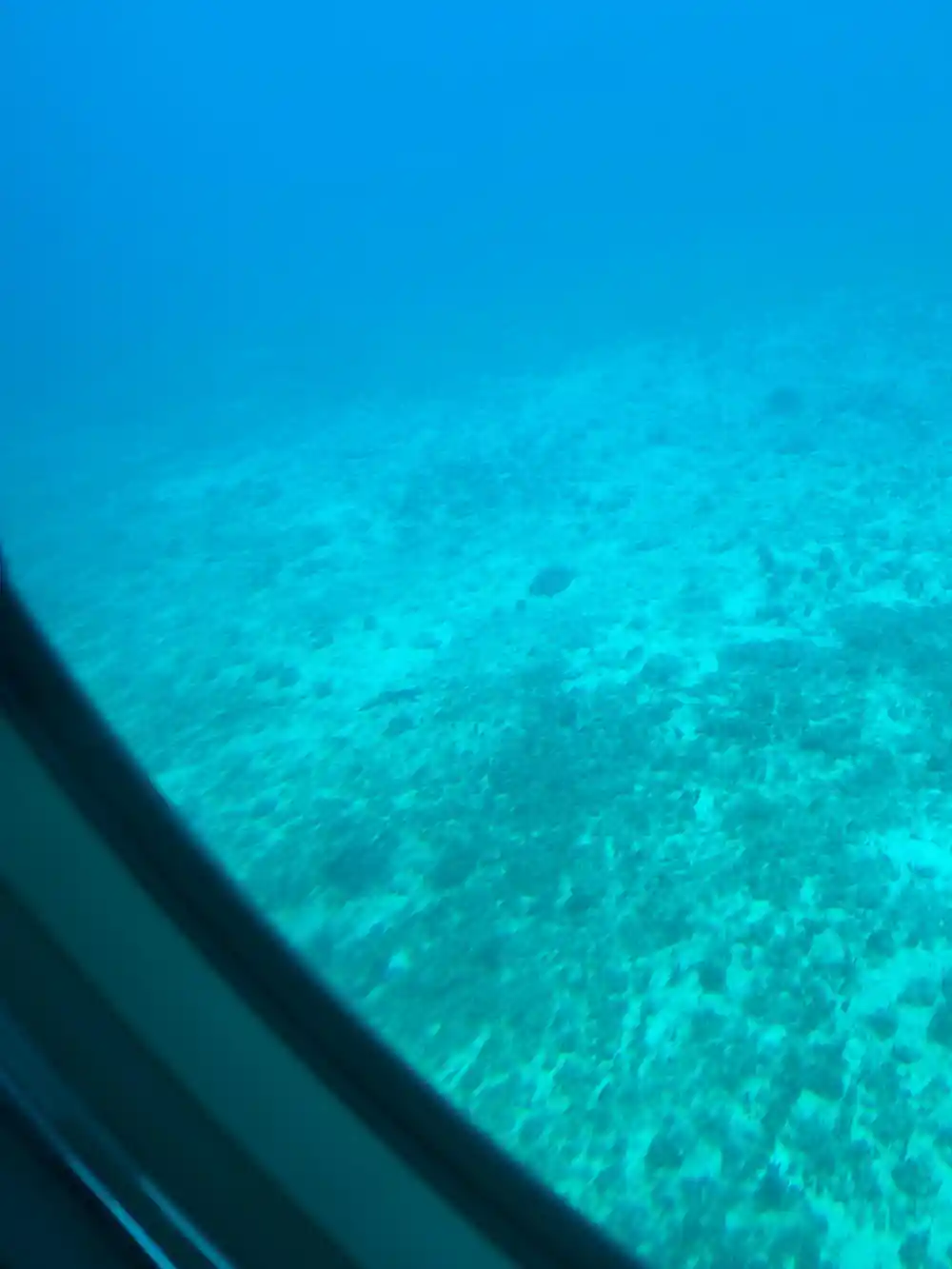
The curvature has a side effect that works in your favour: like a diving mask, a curved port makes what is beyond it appear slightly closer and larger than it is. A turtle at the glass is impressive partly because the window is helping.
The other side effect is less welcome. A lit cabin reflects in a curved inner surface, so photographs taken from a distance pick up the interior. Putting the lens right against the glass removes almost all of it and is the single most useful thing anybody can do with a camera on this dive.
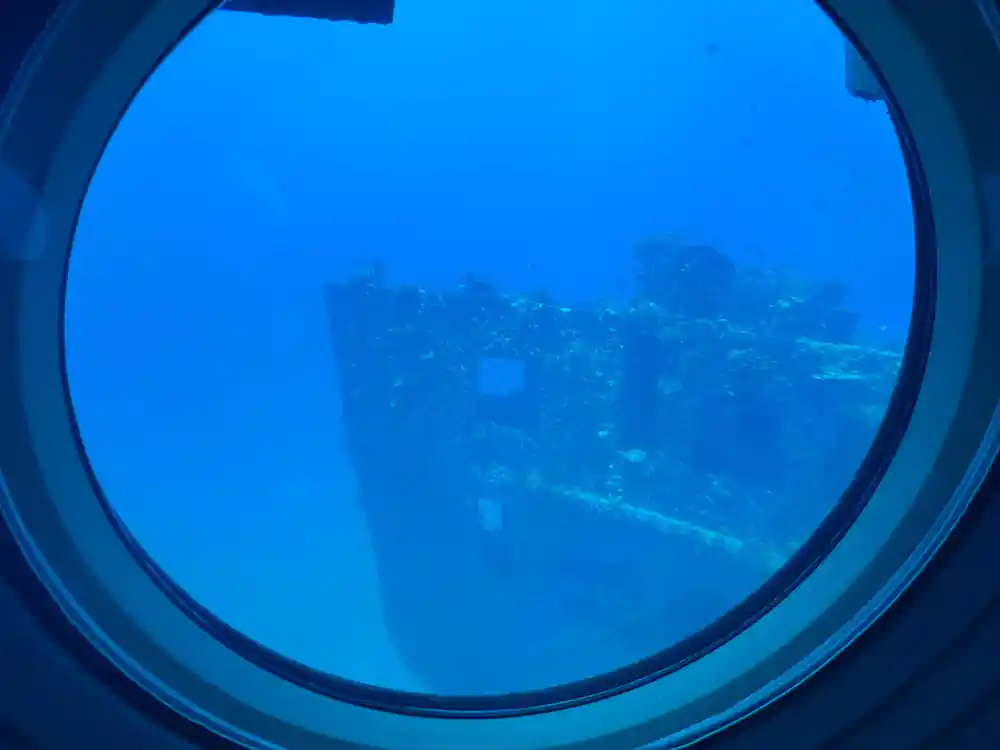
The cabin looking down the hull, viewports on both sides
The cold, which is not a joke
The operator lists a jacket among the things to bring, which sounds absurd for a tropical excursion and is entirely serious.
A sealed cabin containing sixty-four people, machinery and electronics needs substantial air conditioning, and substantial air conditioning in a confined space produces a cold room. Add that you are sitting still for an hour, in whatever you wore to a Hawaiian beach, and a meaningful number of passengers spend the second half of the dive uncomfortable.
A light layer solves it completely and takes no space. This is the least glamorous advice on the site and the most consistently useful.
The other consequence of the air conditioning is that the cabin is dry, which is worth knowing if you were expecting a damp submarine smell. It is not damp and it does not smell of anything much.
Commentary, and what it adds
There is a commentator narrating the whole dive, and it is included rather than an add-on.
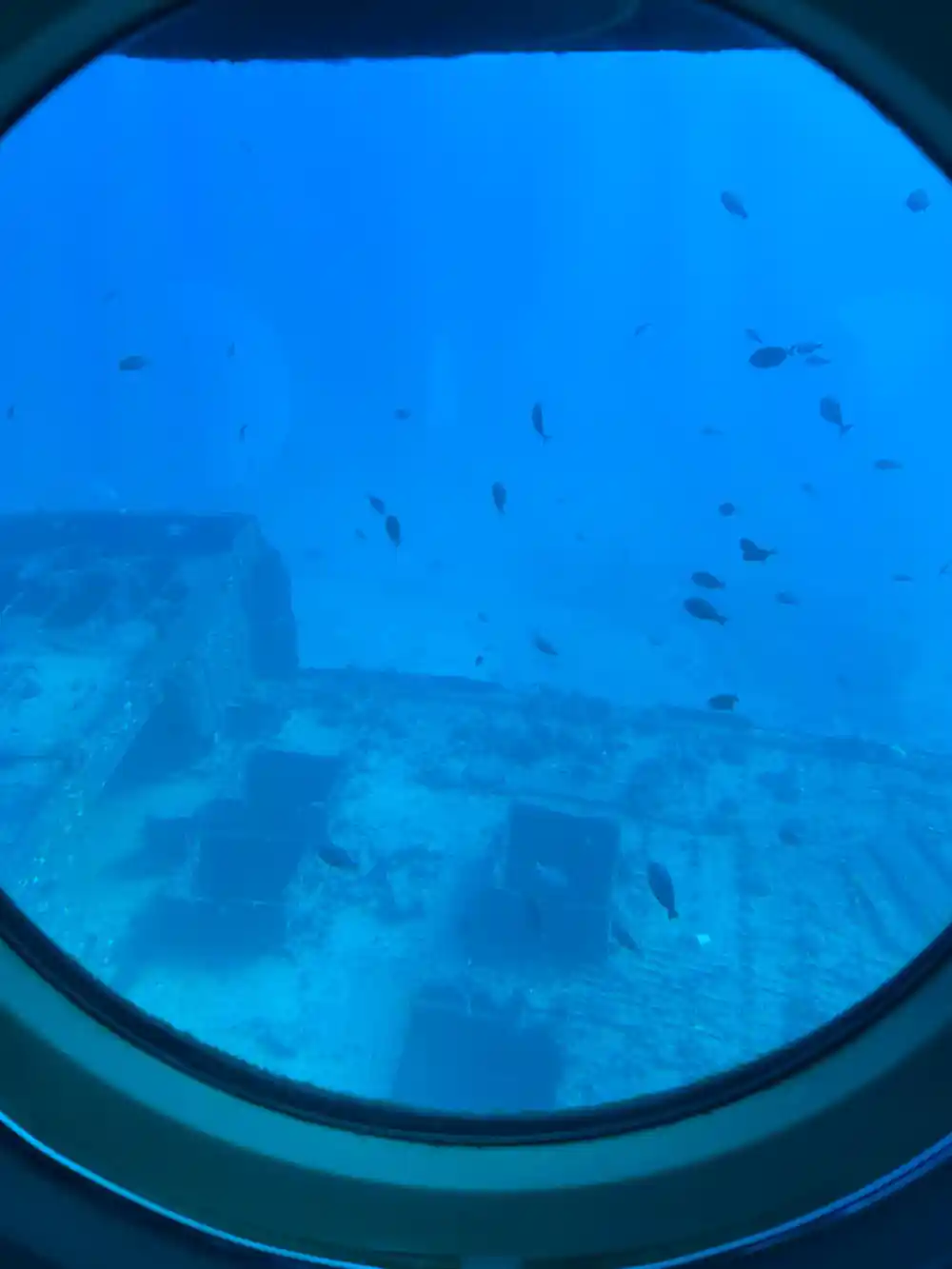
The value is high and easy to underestimate. A hundred feet down, without narration, the dive is a sequence of blue shapes: interesting, and unexplained. With it, the shapes become a particular wreck that went down in a particular year, an artificial reef structure placed deliberately, a species with a name and a habit.
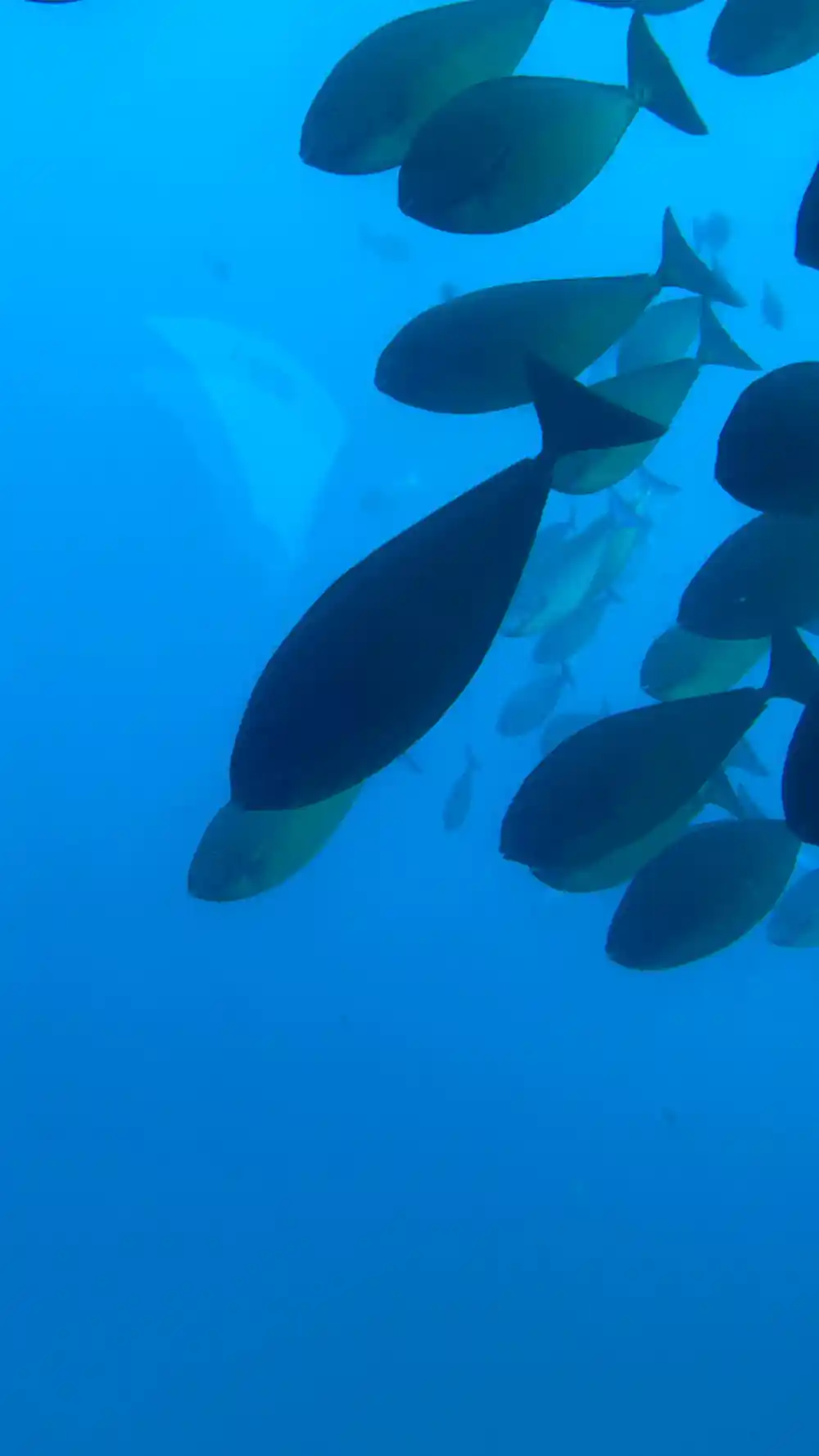
The commentary also does the pointing. Somebody who does this daily sees the turtle before you do and says which side to look at, which materially increases what you actually see.
There is an app associated with the booking as well, which is included. The narration is the part that matters in the moment.
Moving about, and other practicalities
You stay seated for the dive. There is an aisle and it is not a promenade: sixty-four people in a hull have to stay where they are for the boat to be trimmed and for everybody to see anything.
There is no toilet aboard, which is why the twenty-minute check-in and the short duration matter. Use the facilities at the pier.
There is no food or drink service, and the dive is short enough that this is a non-issue.
And the cabin is quieter than expected. Machinery noise is a low background rather than a roar, which leaves the commentary audible and the general atmosphere surprisingly calm for a room containing sixty-four people looking at a shipwreck.
A window each, and bring the jacket
from US$168Reserve now & pay later